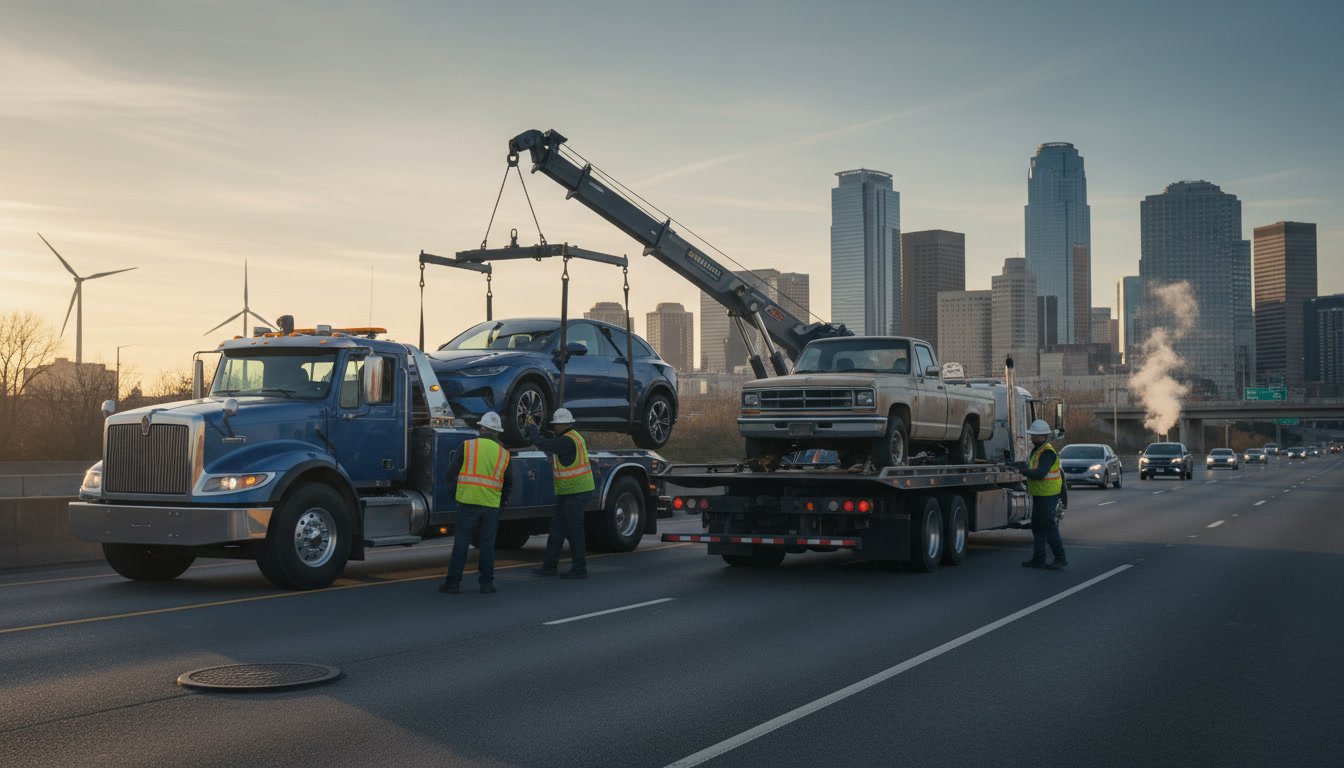

Professional roadside fuel delivery is a structured service where trained technicians bring emergency fuel directly to your stranded vehicle. From the moment you place the call until the fuel enters your tank, the process follows safety protocols and efficiency standards that minimize your wait time. Most services can reach you within 30 to 45 minutes, depending on traffic and location, and have you moving again in under 10 minutes once they arrive.
Why Drivers Run Out of Fuel More Often Than Expected
Many drivers assume running out of gas only happens to careless people, but the reality is more nuanced. Fuel gauge malfunctions can display incorrect readings, especially in older vehicles or after electrical work. Some newer cars with low fuel warnings trigger the light with as much as two gallons remaining, leading drivers to misjudge their actual reserve.
Unexpected detours, closed gas stations during late hours, and miscalculating distance on unfamiliar routes all contribute to empty tanks. Cold weather also reduces fuel efficiency by 15 to 20 percent, catching drivers off guard who planned their fuel stops based on summer driving patterns.
How the Emergency Call Process Works
When you realize your tank is empty, the first step is calling a roadside assistance provider. The dispatcher will ask for your exact location, which is critical for quick service. Using GPS coordinates or nearby landmarks helps when you’re unsure of the street address.
You’ll also be asked about your vehicle type, since fuel capacity and nozzle access vary. The dispatcher records whether you need regular, mid-grade, or premium gasoline, or if you have a diesel engine. This information determines which service vehicle responds and what fuel grade gets loaded before departure.
What the Service Vehicle Carries to Your Location
Professional fuel delivery trucks carry Department of Transportation approved fuel containers, typically two to five gallons of multiple fuel grades. These containers meet safety standards for transport and dispensing, with spill-proof nozzles and proper ventilation systems.
Technicians also bring safety equipment including reflective vests, warning triangles, and flashlights for low-visibility situations. Most carry basic tools to access fuel doors that won’t open due to dead batteries, since power locks can trap the fuel cap release.
The Technician Evaluates Your Vehicle Safety First
Upon arrival, the professional doesn’t immediately start pouring fuel. They first assess whether your location is safe for fuel transfer. If you’re stopped on a highway shoulder or blind curve, they may ask you to help position warning triangles or move the vehicle slightly if it still has momentum from a recent roll.
The technician checks for fuel leaks, damaged fuel lines, or strong gasoline odors that would indicate a tank breach. Delivering fuel to a compromised system creates fire hazards and wastes the service. If they spot issues, they’ll recommend a tow instead, similar to situations where you need to decide between fuel delivery or a tow truck.
The Fuel Transfer Process in Seattle
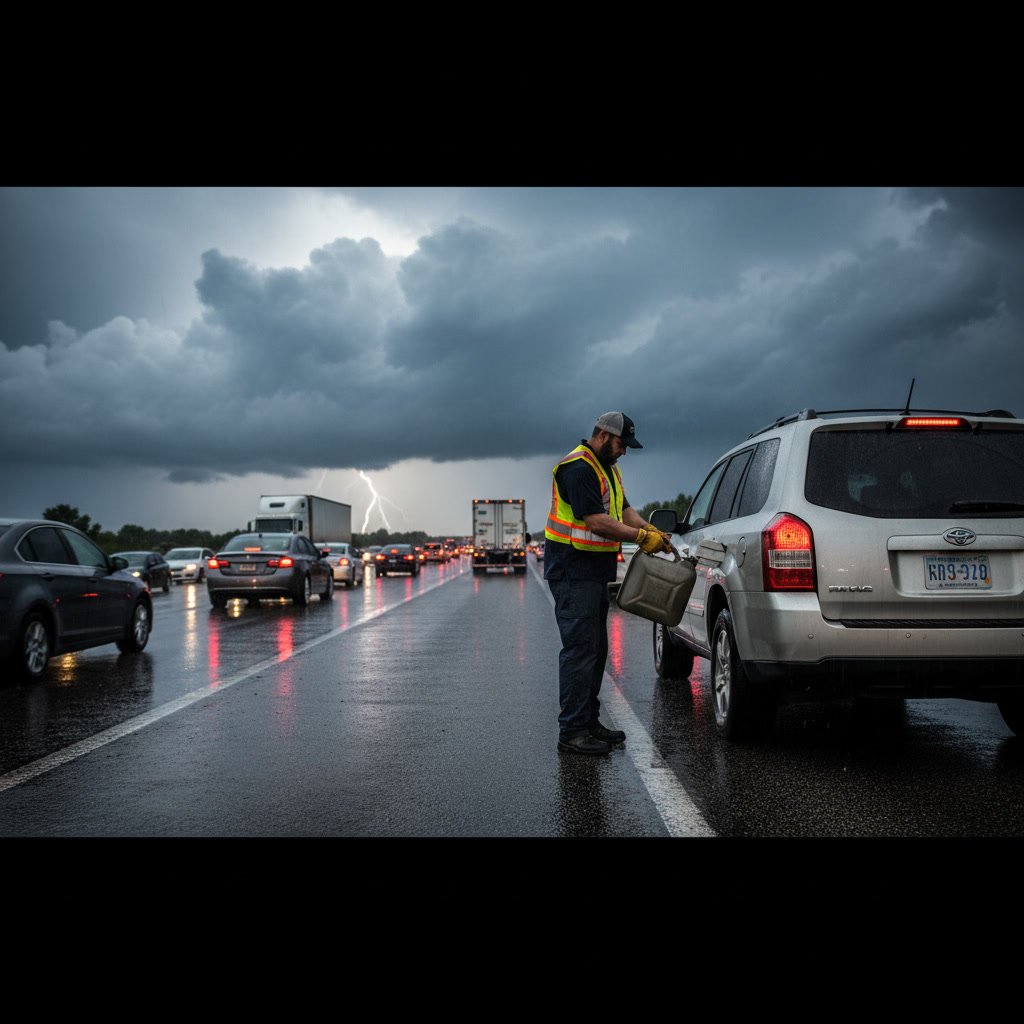
Once safety checks pass, the technician opens your fuel door and removes the cap. They insert a long-neck funnel or direct-pour nozzle designed to prevent spills and vapor release. The fuel flows at a controlled rate, usually taking three to five minutes for a standard two to three gallon delivery.
Most services in Seattle deliver enough fuel to reach the nearest gas station with a comfortable buffer, not a full tank. This keeps costs reasonable while ensuring you won’t run out again before refueling properly. The typical delivery gets you 20 to 40 miles of range depending on your vehicle’s efficiency.

What Happens If Your Car Won’t Start After Fuel Delivery
Adding fuel doesn’t always result in an immediate start, especially if the tank was completely dry. Modern fuel injection systems need to re-prime, which can take several ignition attempts. The technician will typically wait while you try starting, giving the fuel pump time to draw gasoline through the lines.
If the engine cranks but won’t catch after five or six attempts, the battery may have drained from previous start attempts before the service arrived. In these cases, many fuel delivery technicians also carry jumper cables or portable battery packs. This dual capability mirrors how professional jumpstart services work alongside other assistance.
Diesel engines present unique challenges because they can trap air in the fuel system when run dry. Purging this air often requires specialized tools beyond what a basic fuel delivery includes, potentially necessitating a tow to a repair shop.
Payment and Documentation on Site
Payment typically happens before the technician leaves. Most services accept credit cards via mobile readers, though some still take cash. You’ll receive a receipt showing the fuel quantity, grade delivered, service fee, and any additional charges for after-hours response or extended travel distance.
Some providers offer membership programs that waive service fees or include one free fuel delivery per year. If you use insurance-based roadside coverage, the technician may ask for your policy number to bill directly, though you might still pay upfront and file for reimbursement later.
How Weather and Traffic Affect Response Times
Response speed varies significantly based on external factors. During rush hour or major events, a technician might need 60 minutes or more to navigate congested roads. Severe weather adds time as service vehicles must drive cautiously with fuel containers aboard.
Snow and ice create additional complications since many fuel delivery trucks aren’t equipped with the same traction systems as dedicated tow trucks. Providers prioritize calls based on safety risk, so a stranded driver on a busy freeway gets faster response than someone in a well-lit parking lot. Understanding these factors helps set realistic expectations, much like knowing what affects response times for other emergency services.
The Follow-Up Advice Professionals Give
Before leaving, experienced technicians often share practical guidance to prevent future incidents. They might recommend downloading apps that show real-time gas station locations and hours, or suggest keeping a small fuel container in your trunk for rural driving.
One expert-level insight often overlooked is the quarter-tank rule for winter driving. Keeping your tank above one-quarter full prevents fuel line freeze-ups in cold weather, since condensation in near-empty tanks can create ice crystals that block fuel flow. This simple habit eliminates a common winter breakdown cause that many drivers never connect to fuel level.
They’ll also point out the nearest gas station from your current location and confirm you have enough fuel to reach it comfortably. Some technicians use mapping apps to show you the exact distance and driving time, removing any guesswork from your next move.
When Fuel Delivery Isn’t the Right Solution
Certain situations require towing rather than fuel delivery. If your fuel gauge shows empty but you recently filled up, you likely have a fuel system leak or pump failure rather than simple depletion. Visible fuel puddles under your vehicle, strong gasoline smells, or engine performance issues before the stall all suggest mechanical problems.
Vehicles stuck in locations where idling would create carbon monoxide risks, like enclosed spaces or snow-blocked exhaust pipes, shouldn’t receive fuel delivery. The technician will recommend extraction first. Similarly, if your breakdown includes other issues like overheating or strange noises, adding fuel won’t address the underlying problem.
Getting Back on the Road Safely
Once fuel delivery is complete and your engine starts reliably, the technician confirms you’re ready to drive. They’ll often watch you pull away safely, especially if you’re merging into traffic from a dangerous position. This final safety check ensures the service truly solved your problem rather than leaving you vulnerable to another breakdown.
The entire process, from call to departure, typically takes 45 to 60 minutes total, with only the last 10 minutes involving actual fuel transfer and vehicle restart. This efficiency gets you back to your day with minimal disruption while maintaining safety standards throughout.
Whether you’re stranded on your morning commute or late at night on an unfamiliar road, understanding this step-by-step process removes uncertainty from an already stressful situation. Smith Towing provides reliable fuel delivery throughout the greater Seattle area with trained technicians who follow these proven protocols. If you find yourself out of gas and need immediate help, call +18633732644 for fast, professional service that gets you moving again.