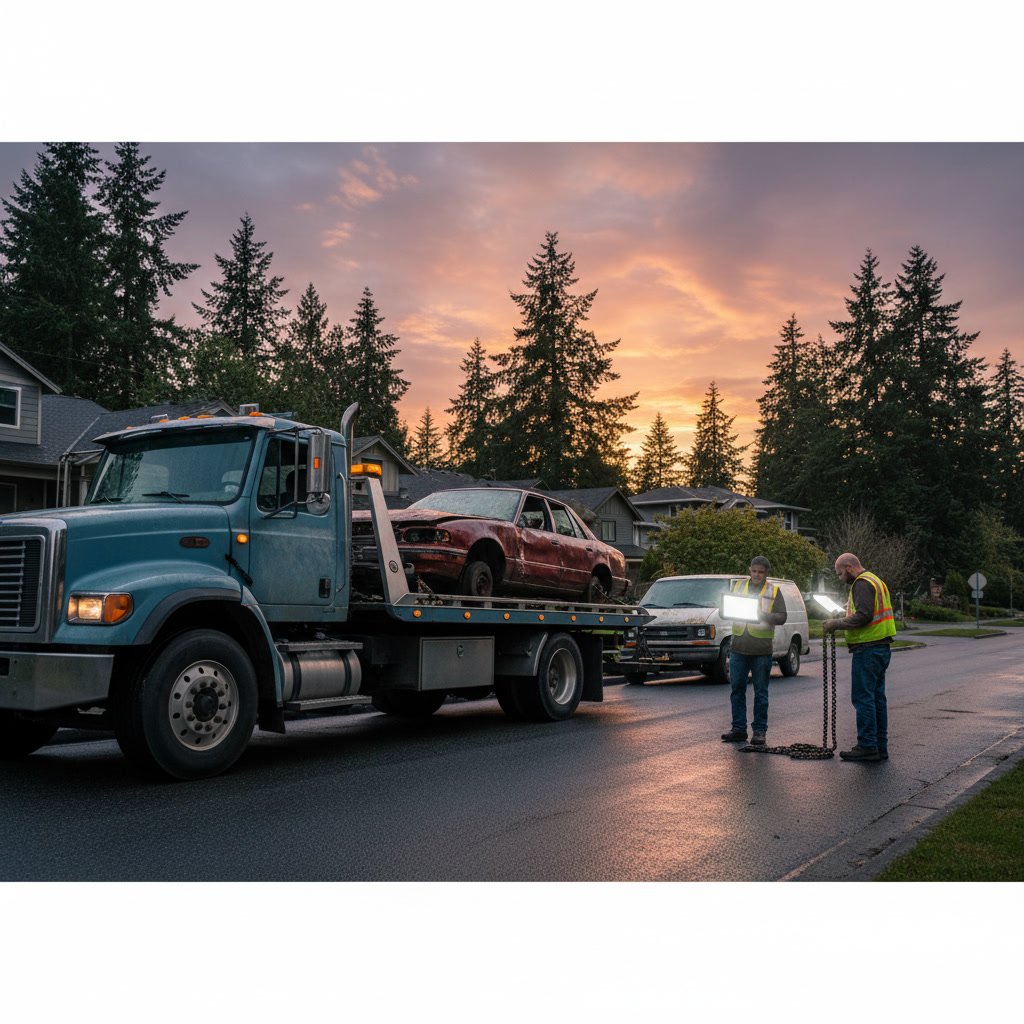
Your car battery dies in a parking lot off Redmond Way, or you blow a tire heading toward the Microsoft campus during rush hour. In moments like these, you need help fast. Knowing what influences roadside assistance Redmond response times helps you set realistic expectations and take steps to speed up the process when you’re stranded.
Response times vary widely based on your location, the time of day, weather conditions, and how many other drivers need help at the same time. This guide breaks down the factors that determine how quickly a tow truck or service vehicle reaches you in Redmond, what typical wait times look like, and what you can do to minimize delays.
Average Response Times for Roadside Assistance in Redmond
Most roadside assistance providers in the Redmond area aim for response times between 20 and 45 minutes under normal conditions. This window accounts for dispatch processing, travel time from the service vehicle’s current location, and navigation through local traffic patterns.
However, these are averages. During peak commute hours on State Route 520 or along NE 85th Street, response times can stretch to 60 minutes or longer. Late-night calls, when fewer service vehicles are on the road, often see faster responses because traffic is lighter and demand is lower.
Some situations require specialized equipment or additional coordination, which adds time. A standard jumpstart or tire change typically falls on the faster end of the spectrum, while a vehicle extraction from a difficult position may take longer to arrange.
Geographic Factors That Impact Response Time
Redmond’s layout and infrastructure play a significant role in how quickly help arrives. The city’s mix of dense commercial zones, sprawling residential neighborhoods, and major thoroughfares creates pockets where service is faster or slower.
High-Traffic Corridors and Business Districts
Areas near the Microsoft campus, Redmond Town Center, and along Redmond Way see high vehicle volumes throughout the day. While service providers often position trucks near these zones, heavy traffic can delay their arrival even when they’re close by.
Congestion on SR-520, especially during morning and evening commutes, slows emergency vehicles just like it does regular traffic. What might be a 10-minute drive at 2:00 AM can take 30 minutes at 5:30 PM.
Residential and Remote Areas
Neighborhoods in north Redmond near Cottage Lake or areas along the Sammamish River Trail are farther from main service routes. If a tow truck is coming from seattle, WA 98134, adding those extra miles extends response time.
Rural-adjacent roads with limited signage or poor lighting also slow service vehicles as drivers navigate unfamiliar territory, particularly after dark.
Time of Day and Service Demand
When you call for help matters almost as much as where you call from. Demand for roadside assistance follows predictable patterns tied to commute times, weather events, and even the day of the week.
Peak Demand Windows
Monday through Friday between 7:00 AM and 9:00 AM, then again from 4:00 PM to 7:00 PM, represent the busiest periods for service calls. More drivers on the road means more breakdowns, dead batteries, flat tires, and accidents competing for available service vehicles.
During these windows, you may wait longer simply because every provider in the area is handling multiple calls simultaneously. Dispatch systems prioritize based on safety concerns, so a car blocking traffic on a highway gets attention before one safely parked in a lot.
Off-Peak Advantages
Late-night and early-morning calls often see the fastest response times. Fewer vehicles are on the road, traffic flows freely, and demand for services drops sharply. A call at 11:00 PM might bring a truck in 15 to 20 minutes, half the time of a similar call during rush hour.
Weekend mornings also tend to be quicker, though Saturday and Sunday afternoons can get busy again as people run errands or travel.

Weather Conditions and Seasonal Variations
Pacific Northwest weather creates unpredictable challenges for roadside assistance providers. Rain, ice, snow, and fog all affect both how quickly service vehicles can travel and how many calls they receive.
Winter Weather Events
Even light snow or freezing temperatures bring a surge in service requests. Battery failures spike in cold weather, and icy roads lead to more accidents and vehicles sliding off pavement. During these events, response times can double or triple as providers work through a backlog of calls.
Snow also limits where service vehicles can safely travel. If your car is stuck on an unplowed side street, crews may need to wait for road conditions to improve or arrange specialized equipment.
Heavy Rain and Flooding
Redmond’s proximity to Lake Sammamish and various creeks means some roads flood during heavy rainfall. Providers cannot reach certain areas until water recedes, and the increased accident rate during storms keeps every available truck busy.
Visibility issues in fog or heavy rain also slow travel speeds for service vehicles, adding minutes to every call.
The Type of Service You Need
Not all roadside assistance calls require the same resources or expertise. Simple services dispatch and complete faster, while complex situations need more time to coordinate.
Quick Services
Jumpstarts, tire changes, lockout assistance, and fuel delivery typically represent the fastest turnaround. Most service vehicles carry the necessary equipment for these tasks, and the work itself takes 10 to 20 minutes once the technician arrives. If you’re curious about the process, you can learn more about what happens during a professional jumpstart service.
These calls don’t require towing or specialized tools beyond what’s already on the truck, so dispatch can send the nearest available vehicle without worrying about equipment compatibility.
Towing and Complex Situations
Vehicle recovery, accident towing, and situations requiring a flatbed or heavy-duty truck add complexity. Dispatch must locate a vehicle with the right equipment, which may not be the closest unit available.
If your vehicle is in an awkward position, blocking traffic, or requires winching, the job takes longer to set up and execute safely. These factors add 15 to 30 minutes beyond standard towing response times.
Pro Tip: When you call for service, be specific about your vehicle’s make, model, and whether it’s front-wheel, rear-wheel, or all-wheel drive. This information helps dispatch send the right equipment the first time, avoiding delays from return trips.
How Service Providers Manage Their Fleets
Professional towing and roadside assistance companies position their vehicles strategically to minimize response times across their service area. Understanding their approach gives you insight into why some calls get faster service than others.
Strategic Positioning
Providers like Smith Towing distribute trucks across coverage zones rather than keeping them all at a central depot. After completing a call in Kirkland, a truck might wait in that area for the next assignment rather than returning to home base.
This system works well under normal demand but breaks down during sudden spikes. When everyone needs help at once, the closest truck might be 20 minutes away instead of five.
Fleet Size and Availability
Larger companies with more vehicles can cover more simultaneous calls and maintain better response times during peak periods. Smaller operations may have just one or two trucks available, meaning you wait until they finish their current job.
Ask about fleet size and average response times when choosing a provider. Companies that serve multiple cities, from Seattle to Kirkland to Redmond, typically have more resources to draw from than single-location operators.
What You Can Do to Speed Up Response Time
While you can’t control traffic or weather, you can take steps to help your service provider reach you faster and complete the job efficiently.
Provide Accurate Location Information
Use GPS coordinates, cross streets, or nearby landmarks to pinpoint your exact location. “I’m on Redmond Way” isn’t enough on a road that runs for miles. “I’m on Redmond Way near the intersection with 161st Avenue NE, across from the shopping center” gives the driver a target.
If you’re in a parking lot or complex, specify which entrance or building you’re near. Every minute spent searching for you is a minute you’re still waiting.
Describe Your Situation Clearly
Tell the dispatcher exactly what’s wrong. “My battery is dead” is better than “my car won’t start,” because it tells them to send a truck equipped for jumpstarts rather than assuming you need a tow.
Mention if your vehicle is blocking traffic, in a dangerous position, or accessible only by certain routes. This information helps dispatch prioritize your call and route the right resources.
Stay With Your Vehicle When Safe
Service technicians need to confirm your identity and get keys or instructions. If you’ve walked to a nearby business or called from home, they may arrive and leave if they can’t locate you, resetting the clock on your wait time.
If staying with the vehicle isn’t safe due to traffic or weather, tell the dispatcher where you’ll be waiting and make sure your phone is charged and volume up.
Choose a Reliable Provider Before You Need One
Save the contact information for a trusted roadside assistance provider in your phone before an emergency happens. This saves time spent searching online or calling multiple companies while you’re stranded.
Look for companies with local dispatch, multiple vehicles, and coverage across the areas you drive regularly. A provider based in Redmond will reach you faster than one dispatching from Tacoma or Everett.
When Delays Are Unavoidable
Sometimes, despite everyone’s best efforts, you’ll face a longer wait. Knowing when delays are likely helps you plan accordingly and stay safe while you wait.
Major Accidents and Road Closures
A serious accident that closes SR-520 or another major route can trap service vehicles on the wrong side of the closure. They may need to take a 30-minute detour to reach you, even if you’re only a few miles away.
In these situations, dispatch will give you an updated ETA. Use that time to stay safe, stay warm, and let family or coworkers know you’ll be delayed.
Widespread Weather Events
When a snowstorm or ice event hits the entire region, every towing and roadside assistance provider becomes overwhelmed. Wait times can extend to two or three hours as companies work through dozens or hundreds of calls.
If conditions are severe, consider whether waiting is your safest option or if alternative transportation makes more sense. You can always arrange for vehicle recovery once roads improve.
Key Takeaway: During major weather events, providers prioritize calls where vehicles are blocking traffic or creating safety hazards. A car safely parked off the road will wait longer than one stuck in a travel lane.
The Role of Communication and Updates
Good providers keep you informed throughout the process. From the moment you call until the truck arrives, you should know what’s happening and when to expect help.
After dispatching your call, the company should give you an estimated arrival time and the technician’s contact information. If delays occur, they should reach out proactively rather than leaving you to wonder.
Some companies use GPS tracking that lets you see the service vehicle’s location in real time, similar to rideshare apps. This transparency reduces stress and helps you plan your next steps.
If you haven’t heard anything 10 to 15 minutes after your quoted ETA, call back to check status. Occasionally, dispatch errors or miscommunications happen, and a quick call resolves them before you wait unnecessarily.
Choosing the Right Roadside Assistance Provider
Not all towing and roadside assistance companies deliver the same level of service. When comparing options in the Redmond area, consider factors beyond just price.
Look for providers with local knowledge of Redmond’s roads, traffic patterns, and neighborhoods. A company familiar with the area navigates more efficiently and knows shortcuts during heavy traffic.
Check their service hours. Some companies operate 24/7, while others have limited availability at night or on weekends. If you commute early or late, round-the-clock service matters.
Ask about their fleet and service area. Companies serving multiple nearby cities have more trucks and can pull resources from adjacent zones during peak demand. A provider covering Seattle, Kirkland, and Redmond will likely have more availability than one focused on a single neighborhood.
Read reviews that mention response times specifically. Customers who praise fast service or complain about long waits give you real-world data that marketing claims don’t.
Frequently Asked Questions
How long should I expect to wait for roadside assistance in Redmond?
Under normal conditions, expect 20 to 45 minutes from the time you call until a service vehicle arrives. Peak traffic times, bad weather, and high demand can extend this to 60 minutes or more. Late-night calls with light traffic often see response times under 30 minutes.
Does roadside assistance Redmond service cost more during peak hours?
Most providers charge consistent rates regardless of time of day. However, some may add surcharges for overnight service, holidays, or severe weather conditions. Always ask for a quote when you call so you know the total cost upfront.
Can I track my roadside assistance truck in real time?
Some companies offer GPS tracking through an app or web link that shows the service vehicle’s location and estimated arrival time. Ask your provider if this feature is available when you call for service.
What happens if the tow truck can’t reach me due to road conditions?
If flooding, snow, or road closures prevent safe access, the dispatcher will contact you to discuss alternatives. This might mean waiting until conditions improve, meeting the truck at a different location, or arranging a different type of vehicle that can navigate the obstacles.
Will calling multiple companies get me faster service?
Calling multiple providers simultaneously doesn’t speed things up and can create confusion if two trucks arrive. Instead, choose one reliable company, provide clear information, and follow up if your ETA passes without contact. If you’re genuinely concerned about excessive wait times, confirm the company can respond within a reasonable window before you commit.
Getting Reliable Service When You Need It Most
Response times for roadside assistance Redmond depend on location, traffic, weather, demand, and the type of service you need. While you can’t eliminate wait times entirely, choosing an experienced provider and communicating clearly about your situation helps minimize delays.
Smith Towing provides comprehensive roadside assistance throughout Redmond and surrounding areas, with local knowledge and a fleet positioned to respond quickly across the region. When you’re stranded and need help fast, call +18633732644 for reliable service you can count on.