
When your car breaks down, deciding between roadside assistance or tow service depends on whether the issue can be fixed on the spot or requires a mechanic’s shop. Simple problems like a dead battery, flat tire, or empty fuel tank usually need only roadside help. More serious issues like engine failure, transmission problems, or major mechanical damage require a full tow to a repair facility.
Common Car Problems That Only Need Roadside Help
Many vehicle breakdowns are temporary setbacks that professionals can fix right where your car sits. A dead battery is one of the most common causes of roadside calls, and a jumpstart usually gets you back on the road in under 15 minutes. The technician connects portable equipment to your battery, provides the charge needed to start your engine, and checks that your alternator is functioning properly.
Flat tires also fall into this category, assuming your spare is in good condition and your wheel assembly is not damaged. A professional tire change takes about 20 minutes and lets you drive to a tire shop for a permanent repair or replacement. Running out of fuel happens more often than most drivers admit, especially in unfamiliar areas or during unexpected traffic delays. Fuel delivery brings enough gas to reach the nearest station.
Lockouts represent another situation where you need help but your car is mechanically sound. Professional technicians use specialized tools to unlock your vehicle without damaging the door, window, or lock mechanism. This service typically takes less than 30 minutes and costs significantly less than a tow.

Warning Signs Your Car Needs a Tow Instead
Certain symptoms indicate a problem too serious for on-site repair. If your engine overheats and the temperature gauge reaches the red zone, continuing to drive can warp the cylinder head or crack the engine block. These repairs cost thousands of dollars, so towing to a mechanic prevents catastrophic damage.
Transmission problems also require professional diagnosis in a shop. If your car will not shift out of park, slips between gears, or makes grinding noises when you change gears, the transmission fluid, clutch, or internal components may have failed. Driving with transmission issues can destroy the entire system.
Strange noises from the engine, especially knocking, ticking, or rattling that gets louder with acceleration, suggest internal damage. Continuing to operate an engine with worn bearings, broken timing components, or low oil pressure will cause complete failure. Smoke coming from under the hood, whether white, blue, or black, also signals a serious problem that needs immediate attention in a repair facility.
How Fluid Leaks Determine Your Next Step
Not all fluid leaks require a tow, but some create dangerous situations. A small coolant leak might let you reach a nearby shop if you monitor the temperature gauge closely and add fluid as needed. However, a large coolant leak that drains your system in minutes will cause overheating before you travel far.
Oil leaks present similar decisions. A slow drip from a worn gasket might allow short-distance driving if you check the dipstick frequently and maintain proper levels. A sudden loss of oil from a cracked pan or failed seal will starve your engine of lubrication and seize internal parts within miles.
Brake fluid leaks never allow safe driving. If your brake pedal sinks to the floor or feels spongy, you have lost hydraulic pressure and cannot stop effectively. This situation always requires a tow, no matter how short the distance to a repair shop.
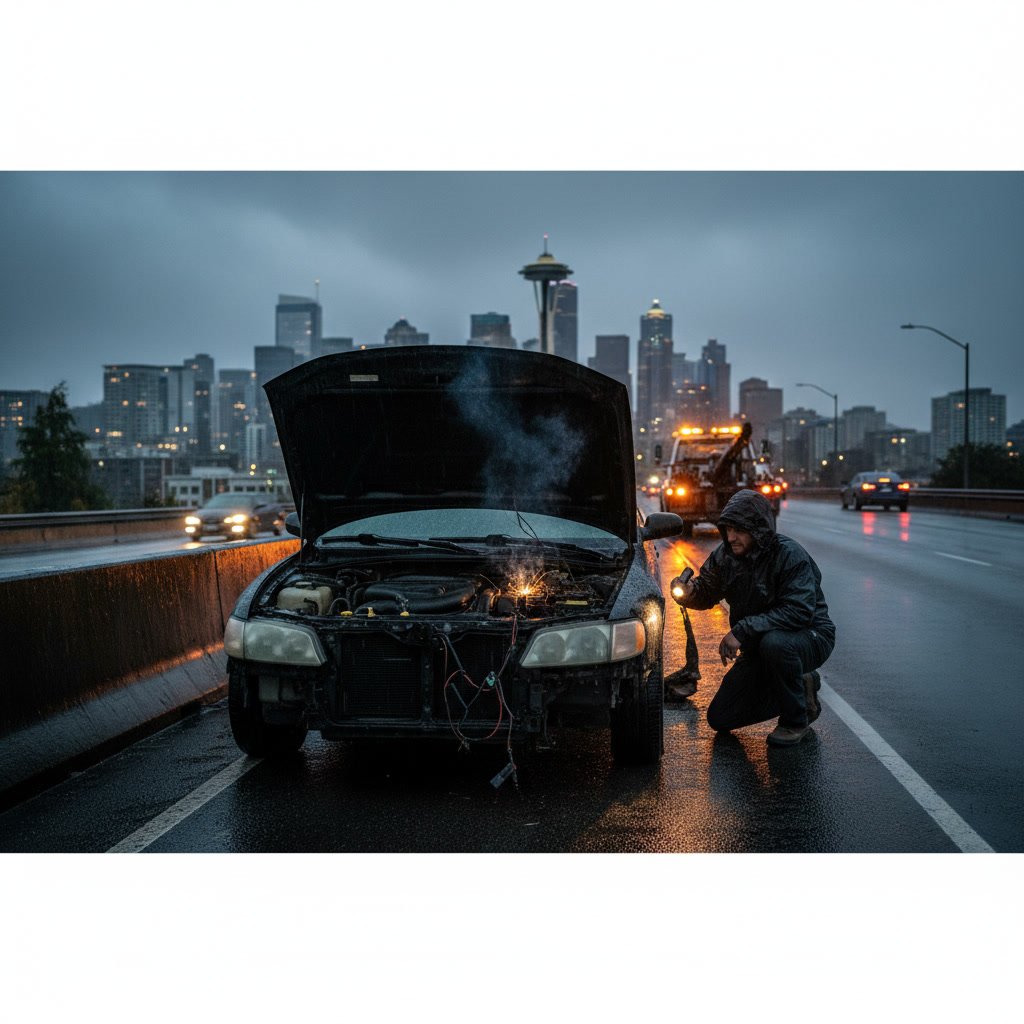
Electrical System Failures and Your Options in Seattle
Modern vehicles rely on complex electrical systems, and failures range from minor to severe. A dead battery usually means you need a jumpstart, but if your battery dies repeatedly, the alternator may not be charging properly. A technician can test the charging system on site and tell you whether the car will make it to a shop or needs immediate towing.
Dashboard warning lights provide clues about whether roadside assistance or tow service is appropriate. The check engine light alone does not always mean you cannot drive, but when combined with performance problems like stalling, hesitation, or loss of power, it suggests a serious issue. The oil pressure light or battery light staying illuminated while the engine runs means you should shut off the car immediately and call for a tow.
Complete electrical failure, where nothing powers on and your key fob does not work, might indicate a security system malfunction or a disconnected battery cable. These problems sometimes have simple fixes, making roadside help the right first call. If the system cannot be reset on site, the technician will arrange towing.
Accident Damage and When Towing Becomes Necessary
Even minor collisions can hide damage that makes driving unsafe. If your airbags deployed, most insurance companies and safety experts recommend towing rather than driving. Deployed airbags indicate significant impact forces, and hidden damage to the frame, suspension, or steering may exist.
Visible damage to wheels, tires, or suspension components requires careful assessment. A bent control arm or damaged tie rod can cause you to lose steering control suddenly. Fluid leaking after an accident often means a punctured radiator, damaged transmission lines, or ruptured brake lines, all of which require towing.
Front-end damage that affects the radiator support or crushes the grille can push components into the fan or belts. Even if the car starts and runs, overheating or belt failure will occur within a short distance. Professional tow operators inspect collision damage and advise whether the vehicle can be safely driven.
Making the Right Decision Based on Your Location
Your surroundings influence whether you should attempt roadside repairs or request immediate towing. A breakdown on a busy highway shoulder creates safety risks for both you and the technician. Limited space, fast-moving traffic, and poor visibility make complex roadside repairs dangerous or impossible.
Weather conditions also matter. Changing a tire in heavy rain or attempting a jumpstart in snow adds difficulty and risk. When conditions are severe, towing to a safe location or repair facility becomes the better choice, even for problems that might otherwise be fixed on site.
The time of day affects decision-making as well. A minor issue during business hours might warrant a quick roadside fix so you can drive to your regular mechanic. The same problem late at night, when most shops are closed, might be better served by towing directly to a 24-hour facility or secure lot until morning.
Cost Considerations Between Services
Roadside services typically cost between $75 and $150 depending on the specific problem and time required. A jumpstart or tire change falls at the lower end of this range, while lockout services and fuel delivery may cost slightly more due to specialized equipment or fuel purchase.
Towing costs more because of the equipment, time, and distance involved. Local tows usually start around $100 for the first few miles and add $3 to $5 per additional mile. However, towing prevents further damage that could multiply repair costs. An engine that overheats while you try to limp to a shop can turn a $500 repair into a $3,000 engine replacement.
Many auto insurance policies include roadside assistance coverage that pays for jumpstarts, tire changes, and towing up to a certain mileage. Reviewing your policy before a breakdown helps you understand what services you can use without out-of-pocket expense.

Questions to Ask When You Call for Help
Describing your situation accurately helps the dispatcher determine which service you need. Explain what happened before the breakdown, what warning lights are showing, what sounds you hear, and whether any fluids are leaking. Mention if your car is making any unusual noises or if you smell burning odors.
The dispatcher will ask about your exact location, whether you are in a safe spot, and if you have access to your vehicle’s manual or service history. They may also ask if your car is all-wheel drive or four-wheel drive, which affects towing methods and equipment needed.
Professional operators have seen thousands of breakdowns and can often diagnose the problem based on your description. They will tell you honestly whether roadside assistance will solve the issue or whether towing is the safer choice. This expertise prevents wasted time and ensures you get the right service immediately.
How Professional Assessment Protects Your Vehicle
One advantage of calling experienced professionals is their ability to evaluate problems beyond your initial description. When a technician arrives, they perform a quick inspection before attempting any repair. This assessment catches hidden issues that might make roadside repairs unsafe or ineffective.
For example, what appears to be a simple dead battery might actually be a failed starter motor. A jumpstart would not help because the problem is not electrical but mechanical. The technician identifies this immediately and arranges towing instead of wasting time on a repair that cannot succeed.
Similarly, a tire that looks flat might have significant sidewall damage that makes driving on the spare dangerous. The technician spots this damage and recommends towing to prevent a blowout at highway speed. This level of expertise comes from years of experience with every type of breakdown scenario.
Special Circumstances That Affect Your Decision
Some situations create unique considerations. If you are towing a trailer when your vehicle breaks down, roadside repairs become more complex and towing requires specialized equipment. The weight and length of your combined load affect what services can be performed safely on site.
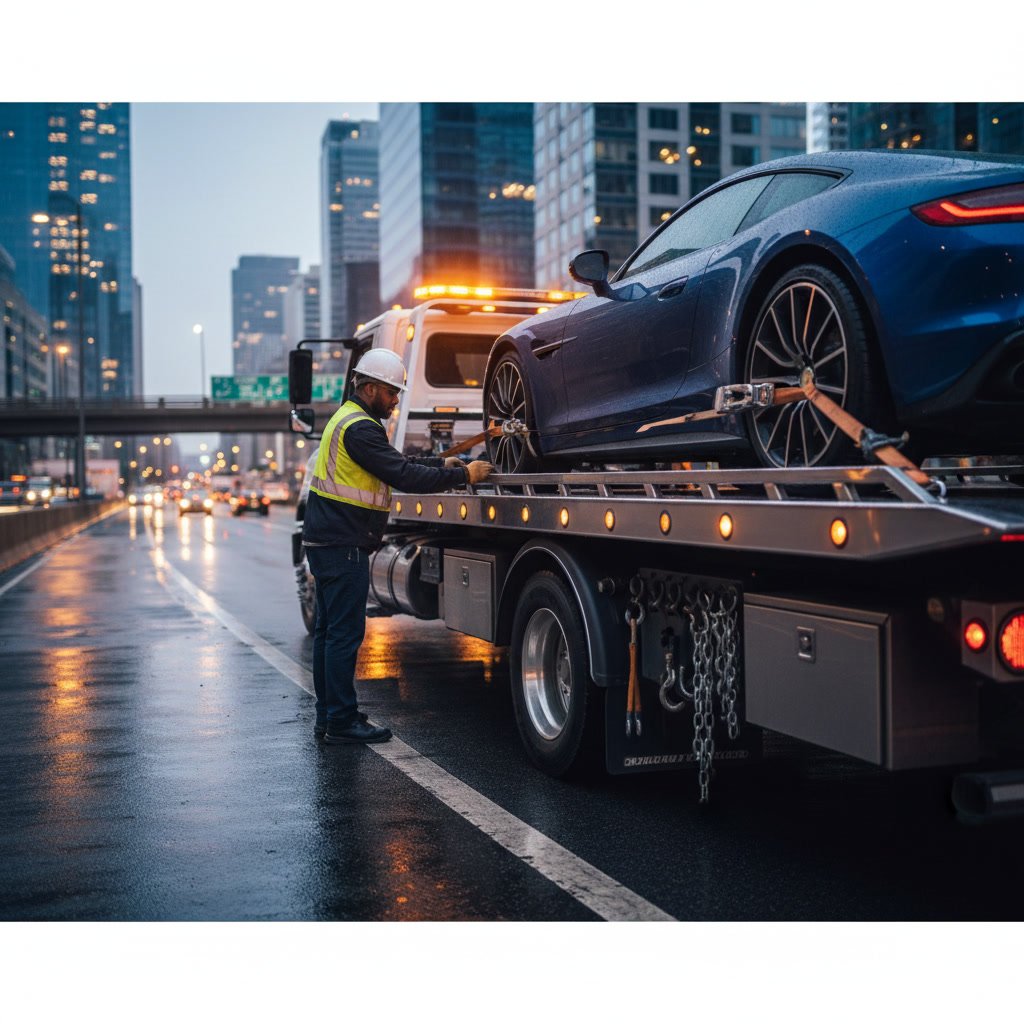
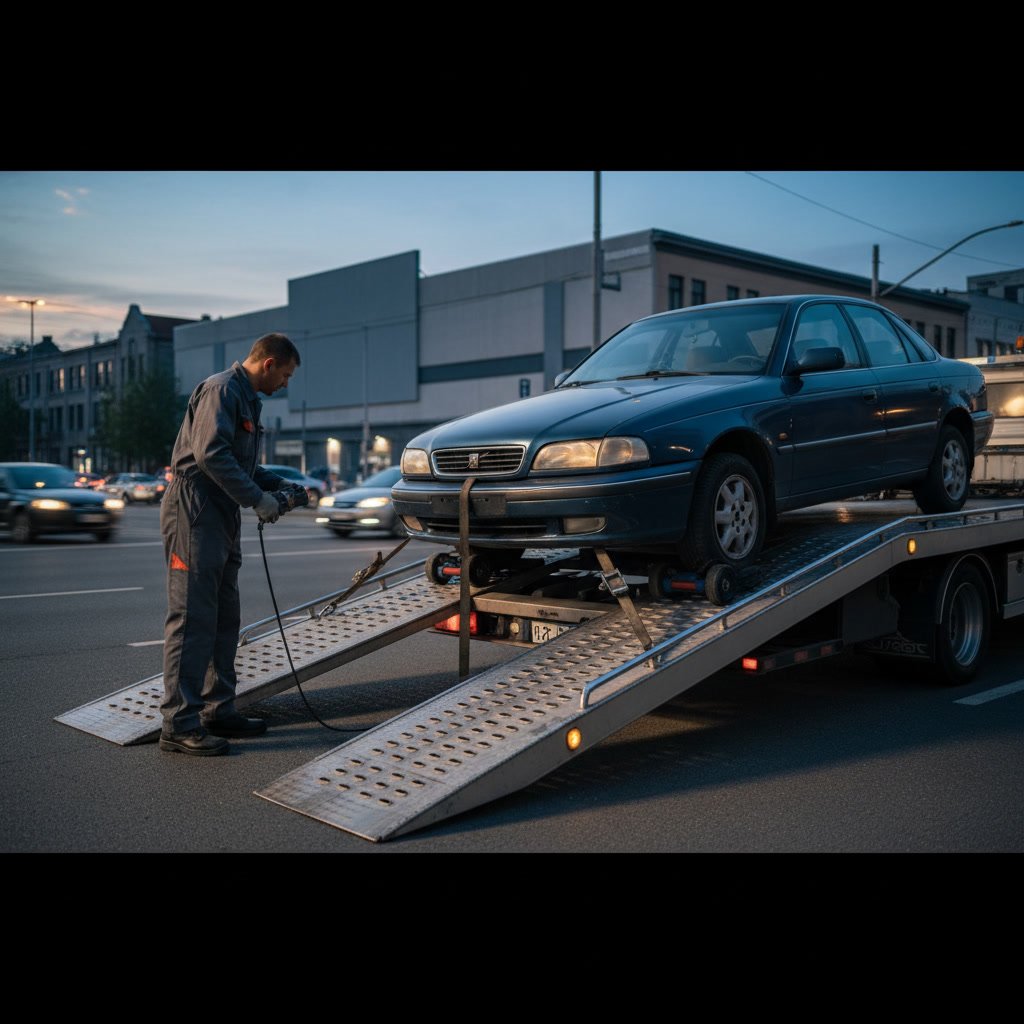
Luxury vehicles and cars with all-wheel drive systems often require flatbed towing rather than traditional wheel-lift towing to prevent damage to the drivetrain. Even if the primary problem might be fixable with roadside assistance, a failed attempt means your car needs flatbed transport. Understanding these requirements helps you request the right service from the start.
Older vehicles with pre-existing mechanical issues require extra caution. If your car already has known problems with the cooling system, transmission, or engine, a breakdown is more likely to require towing than a similar issue in a well-maintained newer vehicle. The technician considers the vehicle’s overall condition when making recommendations.
Getting Back on the Road Safely and Quickly
The right decision between roadside help and towing comes down to safety, practicality, and protecting your investment. Simple problems with quick fixes make roadside assistance the smart choice, saving you time and money while getting you mobile again. Serious mechanical issues, safety concerns, or complex problems always justify the additional cost of towing to prevent further damage and ensure proper repairs.
Trusting professional judgment helps you avoid common mistakes that turn minor breakdowns into major expenses. Experienced technicians see patterns you might miss and recommend the service that truly solves your problem rather than applying a temporary fix that fails miles down the road. Their goal is getting you to your destination safely, whether that means repairing your car on site or transporting it to qualified mechanics.
Smith Towing provides both comprehensive roadside services and professional towing throughout the greater Seattle area. When you are not sure which service your situation requires, our experienced team assesses your vehicle and recommends the solution that gets you back on the road safely. Reach out anytime at +18633732644 for immediate assistance with any breakdown, day or night.