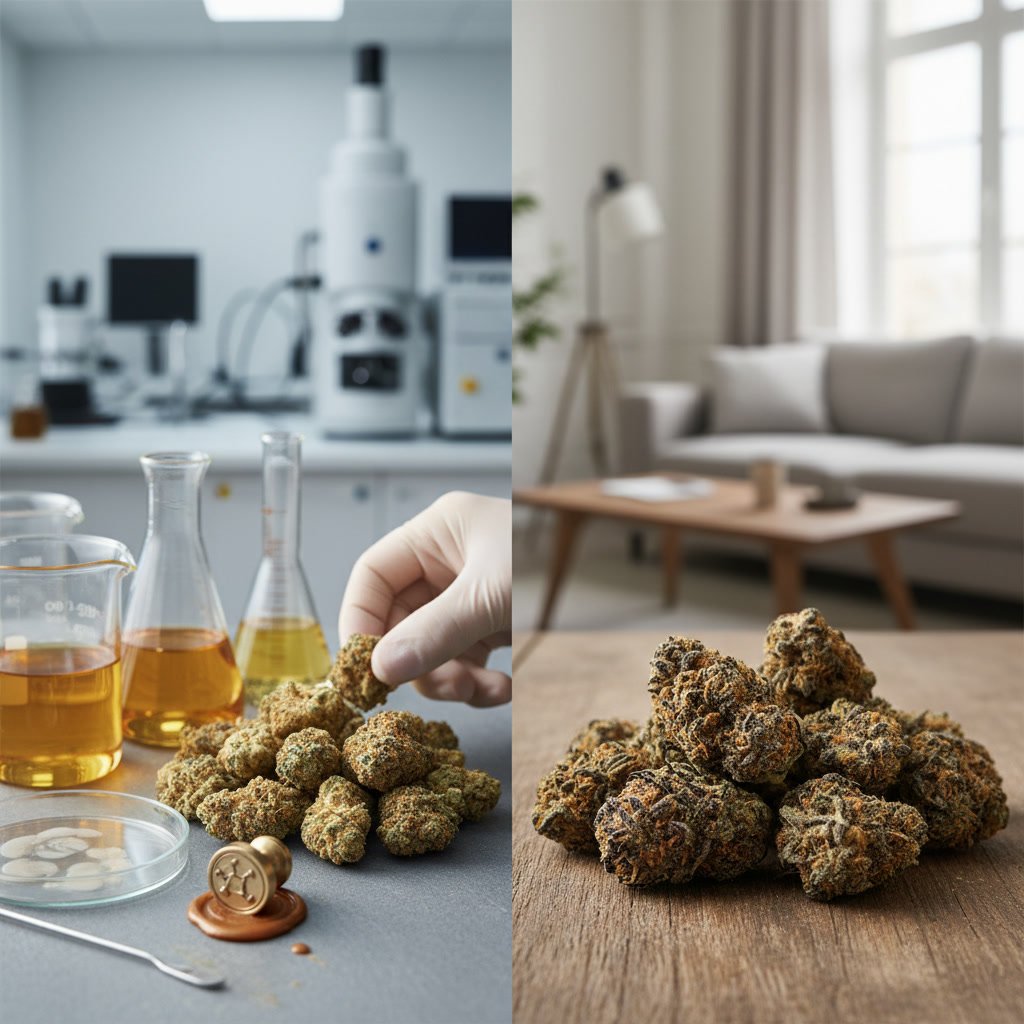
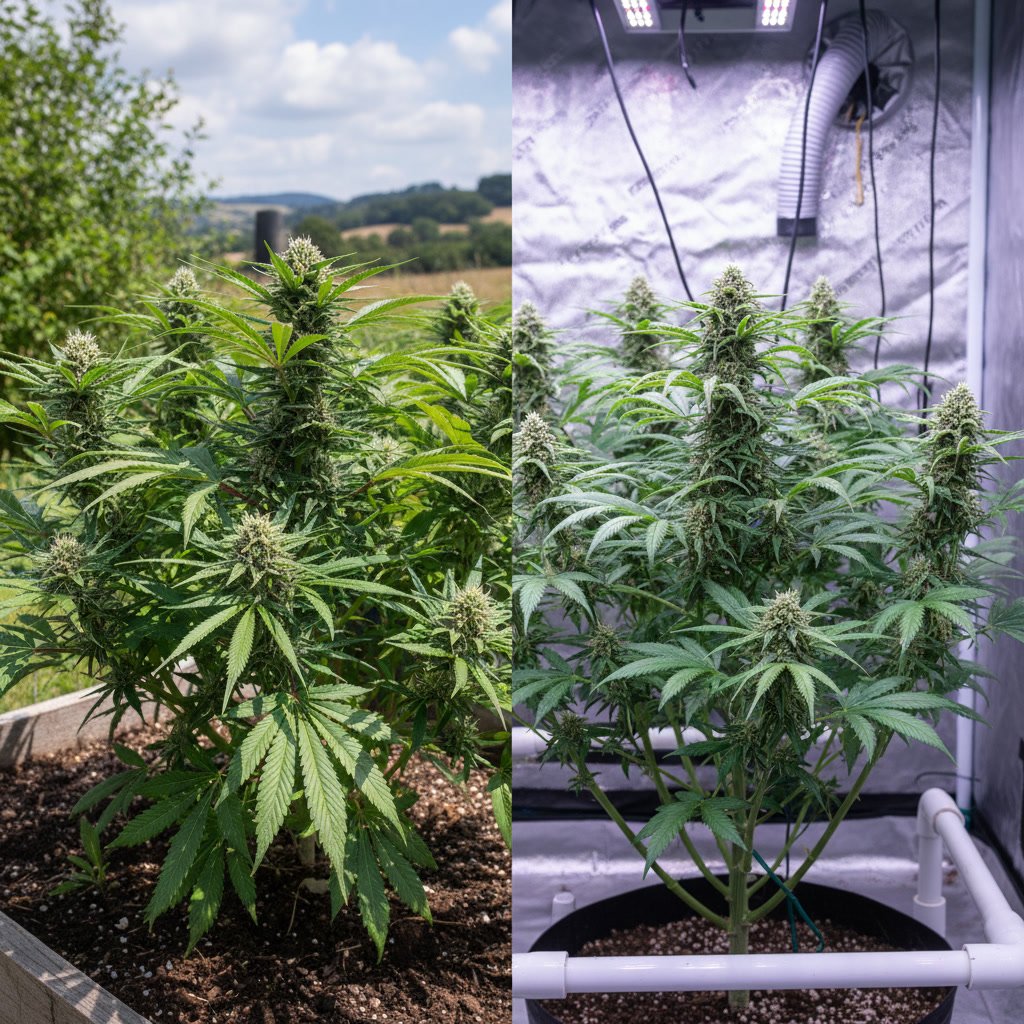
The difference between outdoor vs indoor cannabis comes down to environment, light source, and cultivation control. Indoor cannabis grows under artificial lights in climate-controlled spaces, producing dense, potent buds with consistent cannabinoid profiles. Outdoor cannabis relies on natural sunlight and seasonal cycles, yielding larger harvests with more varied terpene profiles but less environmental control. Each method creates distinct characteristics in the final flower that affect aroma, potency, appearance, and price.
Why Growing Environment Matters for Cannabis Quality
Cannabis is a photoperiodic plant that responds dramatically to light, temperature, humidity, and nutrient availability. The environment shapes everything from trichome density to terpene development. When growers control these variables precisely, they can steer the plant toward specific outcomes. When nature dictates the conditions, the plant expresses a broader genetic range but faces more stress factors that can reduce consistency.
The flower you purchase reflects every day of the plant’s life cycle. A plant stressed by heat or pests will produce different compounds than one pampered in a stable environment. Understanding these differences helps you evaluate cannabis flower beyond just THC percentages and appearance.
How Indoor Cannabis Cultivation Works
Indoor operations use high-intensity discharge lamps, LEDs, or other artificial lighting systems to replicate and optimize the sun’s spectrum. Growers run lights on strict schedules, typically 18 hours on during vegetative growth and 12 hours on during flowering. Climate systems maintain temperature between 70 and 85 degrees Fahrenheit and relative humidity between 40 and 60 percent, depending on growth stage.
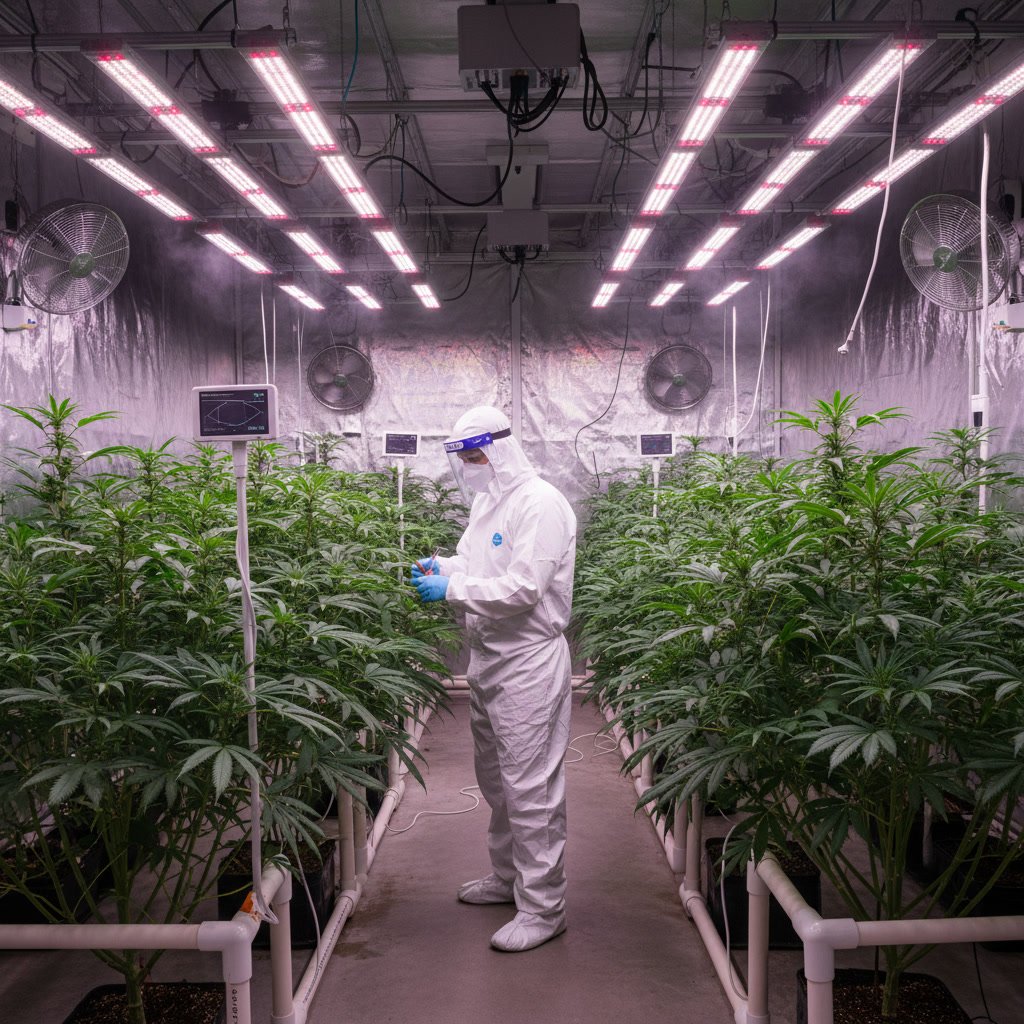
Hydroponic and soil-based systems deliver precise nutrient formulas tailored to each phase. Sealed rooms prevent pest infiltration and allow carbon dioxide enrichment, which can boost growth rates and cannabinoid production. This level of control produces flower with tight bud structure, vibrant colors, and high trichome counts that visually appeal to consumers.
The Advantages of Controlled Indoor Environments
Indoor growers harvest multiple crops per year because they trigger flowering on demand rather than waiting for seasonal light changes. This year-round production keeps supply consistent and allows cultivators to refine techniques with each cycle. Batch-to-batch consistency becomes achievable when every variable stays within tight parameters.
Potency often peaks higher indoors because plants receive optimal light intensity throughout their canopy, thanks to reflective walls and strategic lamp placement. THC levels above 25 percent are common in premium indoor strains. Terpene profiles remain stable because temperature fluctuations stay minimal, preserving volatile aromatic compounds that might evaporate under outdoor heat stress.
Outdoor Cannabis Growing and Natural Sunlight
Outdoor cultivators plant in spring and harvest in fall, working within the constraints of their region’s climate and daylight hours. The sun provides a full spectrum of light that no artificial lamp perfectly replicates, and plants grown under natural sunlight often develop complex terpene profiles with earthy, fruity, and floral notes that can be harder to achieve indoors.
Root systems spread freely in native or amended soil, accessing a broader range of minerals and microorganisms. This interaction with living soil can enhance the entourage effect, where cannabinoids, terpenes, and flavonoids work synergistically. Many connoisseurs prefer the nuanced flavors and smooth smoke of well-grown outdoor flower, even if THC numbers run a few percentage points lower.
Comparing Potency, Terpenes, and Appearance in LaBelle
Indoor flower typically tests between 20 and 30 percent THC, with dense, frosty buds that glisten under light. The trichomes appear uniformly distributed, and the flower feels sticky to the touch. Colors range from deep purple to bright green, often enhanced by controlled temperature drops during late flowering.
Outdoor flower usually tests between 15 and 22 percent THC, though exceptional genetics and skilled cultivation can push higher. Buds tend to be slightly airier, with more leaf material and natural color variation. Terpene levels can actually exceed indoor flower because sunlight and temperature swings stimulate the plant’s defensive chemistry, producing richer aromas. If you prioritize flavor and a full-spectrum experience over maximum THC, outdoor might suit you better.
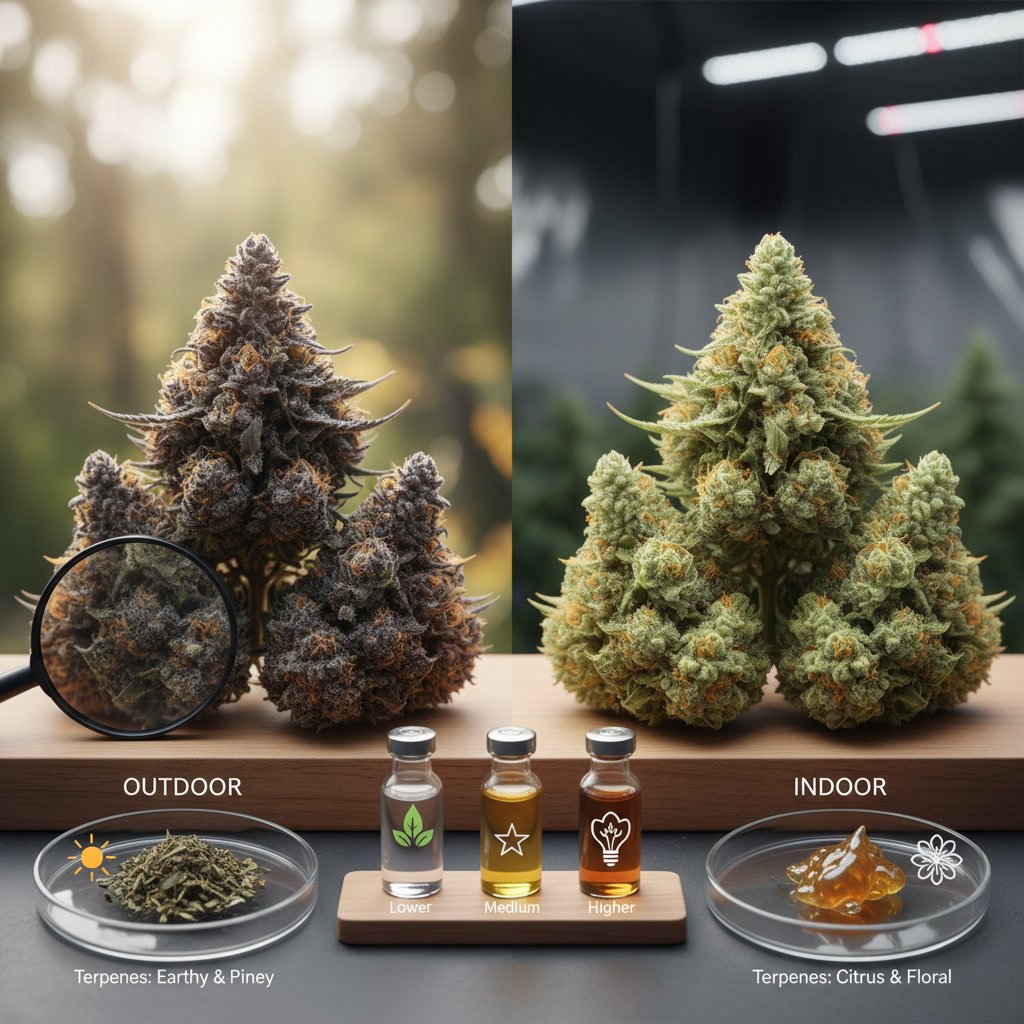
Consumers in LaBelle who explore different growing methods often discover that personal preference matters more than objective measurements. A 22 percent THC outdoor strain with robust terpenes can deliver a more satisfying experience than a 28 percent indoor strain with muted flavor. Just as trichome examination reveals quality, understanding grow method helps you predict effects and value.
Pest Management and Pesticide Concerns
Indoor growers face fewer pest pressures because sealed environments exclude most insects and pathogens. When problems arise, integrated pest management using beneficial insects and organic sprays often suffices. Some operations achieve pesticide-free flower simply by maintaining sterile conditions and monitoring closely.
Outdoor cultivators contend with spider mites, aphids, caterpillars, mold, and mildew. Organic pesticides, companion planting, and careful strain selection help manage these challenges, but outdoor flower carries higher risk of pesticide residue if the grower relies on conventional controls. Lab testing becomes even more critical for outdoor harvests, which is why every product at Kush Kingdom LLC undergoes third-party verification for contaminants and cannabinoid content.
Cost, Sustainability, and Market Pricing
Indoor cultivation requires substantial upfront investment in lights, HVAC systems, and sealed infrastructure. Ongoing electricity costs for 12 to 18 hours of high-wattage lighting per day add up quickly. These expenses push retail prices higher, often two to three times the cost of comparable outdoor flower. Premium indoor strains can command top-shelf pricing because consumers pay for consistency, potency, and visual appeal.
Outdoor growing relies on free sunlight and natural rainfall in many cases, dramatically reducing operating costs. Larger outdoor plots yield hundreds of pounds per harvest, creating economies of scale that translate to budget-friendly retail prices. Environmentally, outdoor cultivation leaves a smaller carbon footprint when growers avoid heavy synthetic inputs and rely on sustainable practices.
For consumers balancing quality and budget, outdoor flower offers excellent value. Many experienced users stock outdoor for daily use and reserve indoor for special occasions. This strategy mirrors how some people choose products like lab-tested CBD lotions for reliable wellness support while exploring premium options when needs change.
Hybrid and Greenhouse Methods Bridging the Gap
Light-deprivation greenhouses combine natural sunlight with blackout tarps that let growers control flowering schedules. This technique captures the sun’s full spectrum while enabling multiple harvests per year. Supplemental lighting and climate controls add precision without the full cost of sealed indoor rooms.
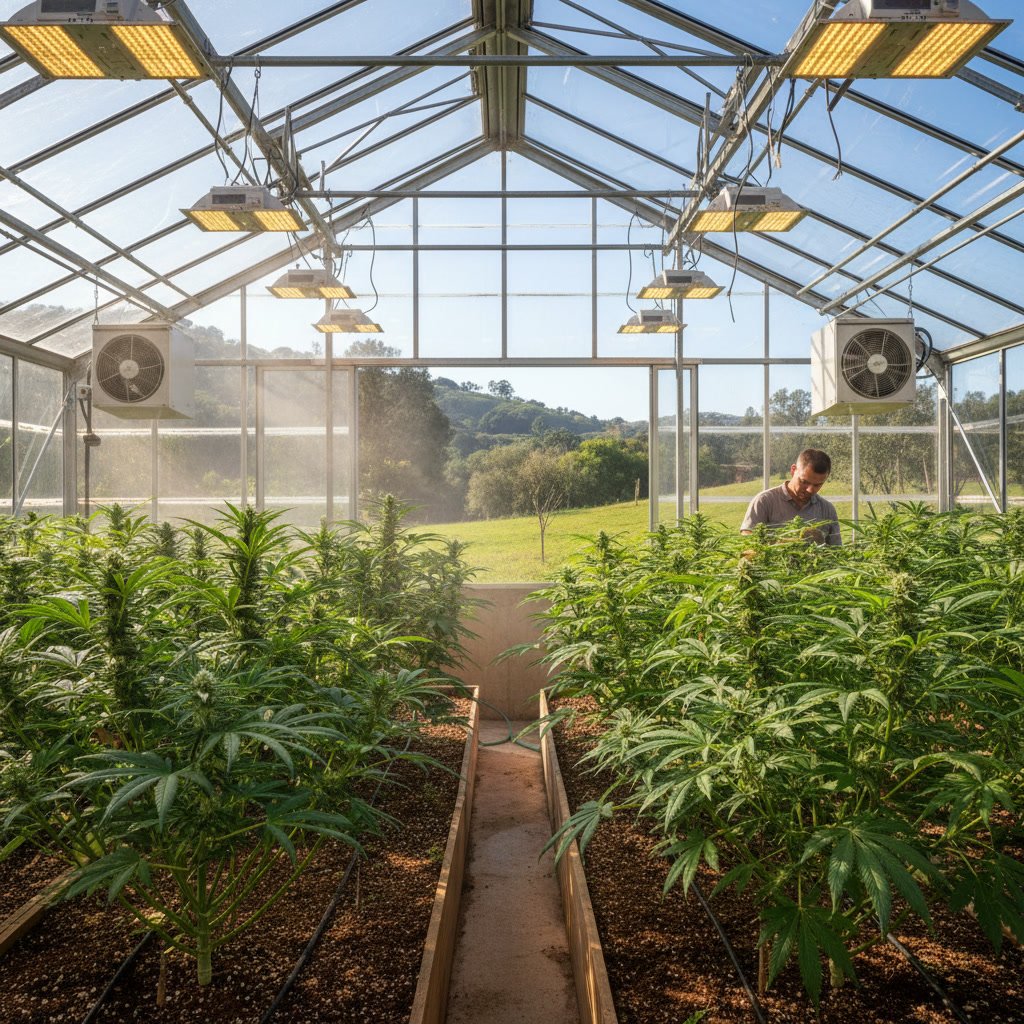
Greenhouse flower often lands between outdoor and indoor in both quality and price. You get improved potency and consistency compared to pure outdoor, plus better terpene complexity than some indoor flower, all at a mid-range price point. Many cultivators view light-dep greenhouses as the best compromise, delivering craft-quality flower with sustainable practices.
Reading Lab Reports to Verify Growing Claims
A certificate of analysis reveals cannabinoid percentages, terpene profiles, and contamination screening. THC and CBD numbers confirm potency, while terpene breakdowns show which aromatic compounds survived the grow and cure. Pesticide, heavy metal, and microbial tests verify safety regardless of grow method.
When comparing indoor and outdoor flower, look beyond total THC. A strain with 20 percent THC and three percent total terpenes often outperforms one with 28 percent THC and 0.8 percent terpenes. The entourage effect depends on this chemical diversity, not cannabinoid content alone. Reputable retailers verify every batch because small-scale outdoor growers and large indoor operations alike can produce contaminated or mislabeled product without oversight.
Making the Right Choice for Your Needs
Choose indoor flower when you prioritize maximum potency, visual bag appeal, and batch consistency. Indoor suits users seeking specific effects from high-THC genetics and those who value the craft and precision behind controlled cultivation. Medical patients managing chronic conditions often prefer indoor for its reliable dosing.
Select outdoor flower when you value robust flavor, sustainability, and cost savings. Outdoor works well for daily users who consume larger quantities and appreciate the full-spectrum profile that sun-grown cannabis delivers. Many people find outdoor provides a more balanced, less racy high because the complete terpene and cannabinoid profile moderates THC’s effects.
Greenhouse and light-dep options serve users who want the best of both worlds. If you enjoy variety and experimentation, try samples of each method to discover your preferences. Personal biochemistry and tolerance play major roles, so what works for one person may not suit another.
Finding Quality Flower Starts with Trusted Sources
Understanding how outdoor and indoor growing methods shape cannabis quality empowers you to make informed choices that match your priorities for potency, flavor, and value. Lab-verified flower from reputable sources ensures you receive clean, accurately labeled products regardless of cultivation technique. Both methods produce exceptional results when growers apply skill, care, and proper testing.
Kush Kingdom LLC carries carefully selected indoor, outdoor, and greenhouse flower with verified lab reports so you can explore different growing methods with confidence. Our team in LaBelle tests every product and provides honest guidance to help you find strains that suit your needs and budget. Call +18633732644 to learn more about current flower selections and discover which growing method delivers the experience you seek.