Cleaning your grinder regularly removes sticky resin buildup, preserves the natural flavor of your herb, and keeps the teeth sharp enough to produce a consistent grind. Most grinders need a deep clean every two to four weeks depending on usage, and the process takes about 15 minutes using isopropyl alcohol, a small brush, and warm water. Learning how to clean a grinder properly extends its lifespan and ensures every session delivers the full flavor profile you expect from quality flower.
Why Regular Grinder Maintenance Matters for Flavor and Performance
Resin accumulation changes the taste of your herb over time. Old residue oxidizes and develops a bitter, stale flavor that masks the terpene profiles you should be enjoying. When resin coats the teeth and screen, your grinder becomes harder to turn, produces uneven particle sizes, and loses kief through clogged mesh. A clean grinder grinds faster, catches more kief in the lower chamber, and lets you taste the true character of each strain without contamination from previous sessions.
Beyond flavor, buildup creates friction that wears down metal threads and weakens plastic components. Grinders with heavy resin deposits require more force to operate, which can strip threading or crack acrylic chambers. Regular cleaning prevents this mechanical stress and keeps your tool functioning smoothly for years.
How Often You Should Clean Your Grinder Based on Usage
Daily users should perform a full cleaning every two weeks. If you grind several times per week, aim for once per month. Occasional users can stretch cleaning intervals to six weeks. The key indicator is resistance when twisting the top chamber. If you notice the grinder becoming harder to turn or if kief stops collecting in the bottom chamber, it is time to clean regardless of your schedule.
Sticky strains with high resin content require more frequent maintenance than drier flower. If you regularly use premium indoor cannabis with visible trichomes, expect to clean more often. A quick wipe-down between deep cleans helps manage buildup without a full disassembly.

Gathering the Right Supplies for a Deep Grinder Clean
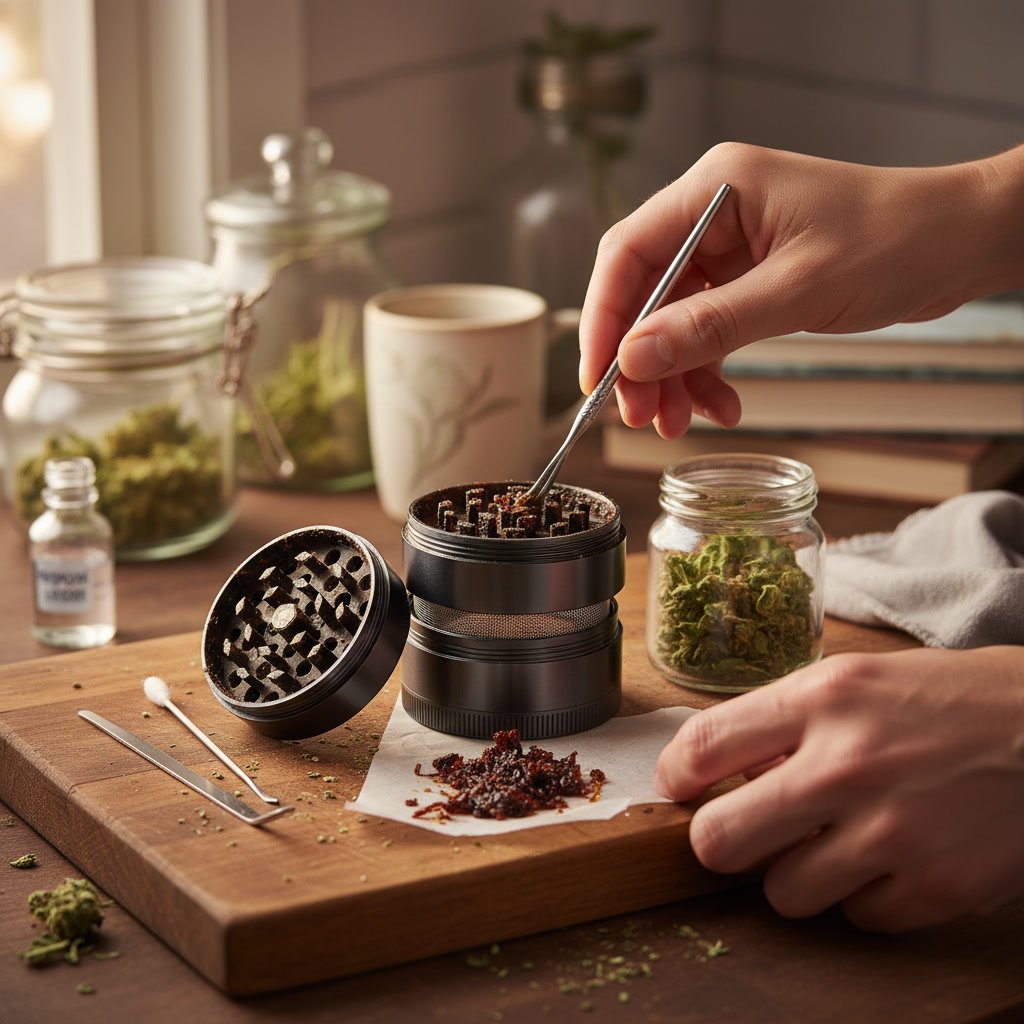
You will need 90% or higher isopropyl alcohol, which dissolves resin more effectively than lower concentrations. A small nylon brush or an old toothbrush works well for scrubbing teeth and threads. Paper towels or a clean cloth handle drying. For stubborn buildup, a wooden toothpick or bamboo skewer helps dislodge packed resin without scratching metal surfaces.
A shallow dish or ziplock bag holds the grinder parts during the soak. Some people add coarse salt to the alcohol to create an abrasive scrub, though this step is optional for most cleaning jobs. Avoid steel wool or metal scrapers, which leave scratches that trap resin and make future cleanings harder.
Step-by-Step Process for Cleaning Metal Grinders
Start by disassembling the grinder completely. Separate the top lid, grinding chamber, screen, and kief catcher. Tap each piece over a clean surface to collect loose kief before you begin. Place all metal parts into a shallow dish or ziplock bag and cover them with isopropyl alcohol. Let the pieces soak for 20 to 30 minutes. The alcohol will turn amber as it dissolves the resin.
After soaking, use your brush to scrub each component. Pay special attention to the teeth, where resin accumulates fastest, and the screen mesh, which clogs easily. Scrub the threads on both the male and female parts to remove sticky buildup that causes grinding resistance. Rinse each piece under warm water to wash away loosened resin and alcohol residue.
Dry all parts thoroughly with paper towels. Let them air dry for at least 30 minutes before reassembling to ensure no moisture remains. Any water left on metal surfaces can promote rust or corrosion over time, especially on lower-grade aluminum grinders.
Special Considerations for Acrylic and Plastic Grinders
Acrylic grinders require gentler treatment than metal models. Prolonged alcohol exposure can cloud or crack plastic, so limit soaking time to five minutes maximum. Use warm soapy water instead of isopropyl alcohol for routine cleaning. A soft-bristle brush and dish soap remove most resin without damaging the material.
For stubborn resin on plastic, apply a small amount of alcohol directly to the problem area with a cotton swab rather than submerging the entire piece. Rinse immediately with warm water. Never use boiling water on acrylic grinders, as high heat warps the plastic and ruins the seal between chambers.
Cleaning the Screen and Kief Catcher in LaBelle Humidity
The screen mesh traps fine particles and requires extra attention. After soaking, hold the screen up to light to check for clogs. Use a toothbrush to scrub both sides, working in a circular motion. For screens with heavy buildup, a toothpick gently pushed through clogged holes from the bottom side clears stubborn blockages without tearing the mesh.
In humid climates like LaBelle, moisture can cause kief to clump and stick to the catcher walls. Wipe the kief chamber with a dry paper towel before soaking to collect any powder. After cleaning and drying, store your grinder in a cool, dry place rather than leaving it in a humid room or vehicle. Humidity accelerates resin stickiness and promotes mold growth on residual plant matter.

How Freezing Your Grinder Simplifies Resin Removal
Freezing makes resin brittle and easier to remove. Place your assembled grinder in the freezer for 30 minutes before disassembly. Once frozen, tap each piece firmly over a collection tray. Frozen resin breaks free from surfaces instead of smearing, and you will recover more kief during this step. After tapping, proceed with the alcohol soak as usual.
This technique works especially well for grinders with months of accumulated buildup. The freeze-then-tap method removes 60 to 70% of resin before you even start scrubbing, cutting your cleaning time significantly. It also helps preserve kief that would otherwise dissolve in the alcohol bath.
Maintaining Grinder Performance Between Deep Cleans
A quick wipe-down after every few uses prevents heavy buildup. Use a dry brush or paper towel to remove loose herb and kief from the teeth and chamber walls. This 30-second habit keeps resin from hardening and extends the time between full cleanings.
Some users apply a tiny drop of food-grade coconut oil to the grinder threads after cleaning. The oil lubricates the threading and prevents resin from bonding as tightly, making future cleanings easier. Use only a minuscule amount, as excess oil attracts dust and plant matter. Quality grinders with precision-machined threads rarely need lubrication if cleaned regularly.
Common Mistakes That Damage Grinders During Cleaning
Boiling water warps aluminum grinders and ruins screens. While some guides recommend boiling as a cleaning method, the extreme heat degrades anodized coatings and weakens structural integrity. Stick with room-temperature or warm water only.
Using lower-concentration rubbing alcohol (70% or below) leaves behind more water, which takes longer to evaporate and increases rust risk. The extra water also dilutes the alcohol’s resin-dissolving power, requiring longer soaking times. Invest in 90% or higher isopropyl alcohol for faster, more effective cleaning.
Forcing stuck threads causes permanent damage. If your grinder will not unscrew after soaking, apply more alcohol to the threaded area and let it penetrate for another ten minutes. Gentle rocking motions work better than brute force. Never use pliers or other tools that dent or scratch the grinder body.

Choosing Quality Grinders That Stay Cleaner Longer
Grinder quality directly affects how quickly resin accumulates. Four-piece grinders with diamond-shaped teeth and hardened aluminum construction grind more efficiently and require less force, which means less resin compression into tight spaces. Cheaper grinders with dull, flat teeth crush herb instead of cutting it, creating more sticky surface contact that accelerates buildup.
Screen mesh quality matters too. Stainless steel screens with uniform micron ratings last longer and clog less often than flimsy alternatives. When shopping for a replacement or upgrade, look for grinders with removable screens that you can replace independently. This feature extends the grinder’s useful life and maintains kief collection efficiency.
If you are exploring alternative wellness options alongside your herb routine, many users in the area have found success with kratom strains for pain relief as part of a broader natural health approach.
Keeping Your Tools in Peak Condition
A well-maintained grinder delivers consistent performance and preserves the full flavor of every strain you use. Regular cleaning prevents mechanical wear, protects your investment, and ensures you taste the terpene profiles that make each herb unique. Set a recurring reminder on your phone to check your grinder every two weeks, and keep a small bottle of isopropyl alcohol and a brush with your supplies for quick maintenance.
By following these steps, your grinder will turn smoothly, catch more kief, and deliver a clean, flavorful experience every time you prepare your herb.
Kush Kingdom LLC in LaBelle carries a full selection of quality grinders, cleaning supplies, and accessories to keep your tools performing at their best. Our knowledgeable team can help you choose the right grinder for your needs and show you the maintenance products that work. Stop by our location at 870 West Hickpochee Ave, unit 200, or call +18633732644 to speak with a team member about our current inventory and expert recommendations.