
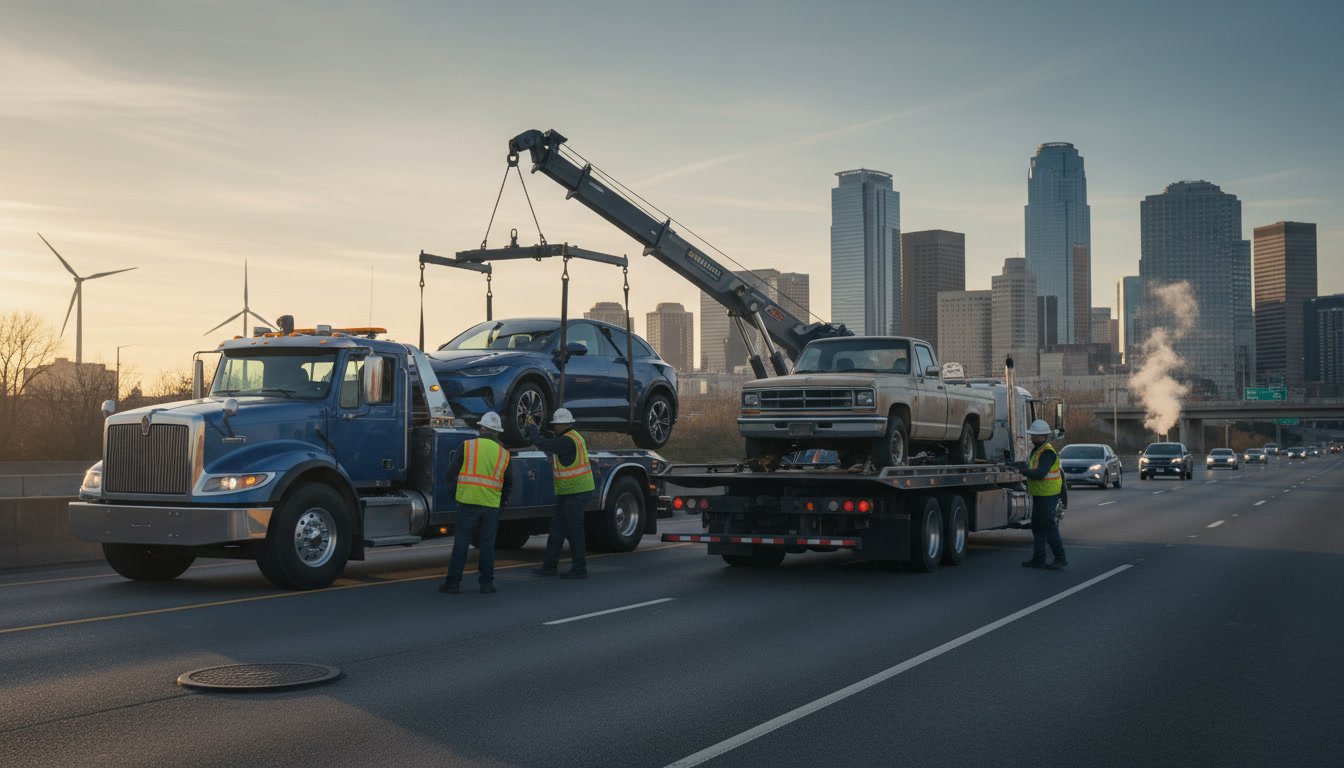
Towing electric vehicles demands different equipment and techniques than gas-powered cars because EV battery packs add 1,000 to 2,400 pounds of weight concentrated in the vehicle’s floor. This extra mass affects everything from trailer capacity to tire contact during transport. Modern tow operators must account for higher gross vehicle weights, unique safety considerations around high-voltage systems, and manufacturer-specific towing restrictions that can void warranties if ignored.
Why Electric Vehicle Weight Matters for Tow Operators
The average midsize sedan weighs around 3,300 pounds. An equivalent electric sedan like a Tesla Model 3 weighs closer to 4,000 pounds, with the Long Range version tipping the scales at 4,065 pounds. That 700-plus-pound difference comes almost entirely from the lithium-ion battery pack mounted beneath the cabin floor.
For tow truck operators, this weight difference isn’t trivial. It determines which tow truck can safely handle the job, affects braking distances during transport, and changes how weight distributes across the tow vehicle’s axles. A flatbed rated for 7,000 pounds can comfortably handle most gas sedans but might approach its limit with a larger electric SUV like a Rivian R1S, which weighs over 7,000 pounds before passengers or cargo.
How Battery Placement Creates New Towing Challenges
Gas vehicles store most of their weight in the engine bay at the front. Electric vehicles spread battery weight evenly across the entire wheelbase in a skateboard configuration. This low center of gravity makes EVs handle beautifully on the road but creates complications during towing.
When a traditional wheel-lift tow truck lifts either the front or rear wheels of a vehicle, the weight shifts to the remaining wheels on the ground. With a gas car, this shift is predictable. With an EV, the concentrated battery mass creates more strain on the wheels left in contact with pavement, increasing tire scrub and potential damage to suspension components during transport. Many EV manufacturers now explicitly prohibit wheel-lift towing in their owner’s manuals for this reason.
Flatbed Transport Requirements for Electric Vehicles in Seattle
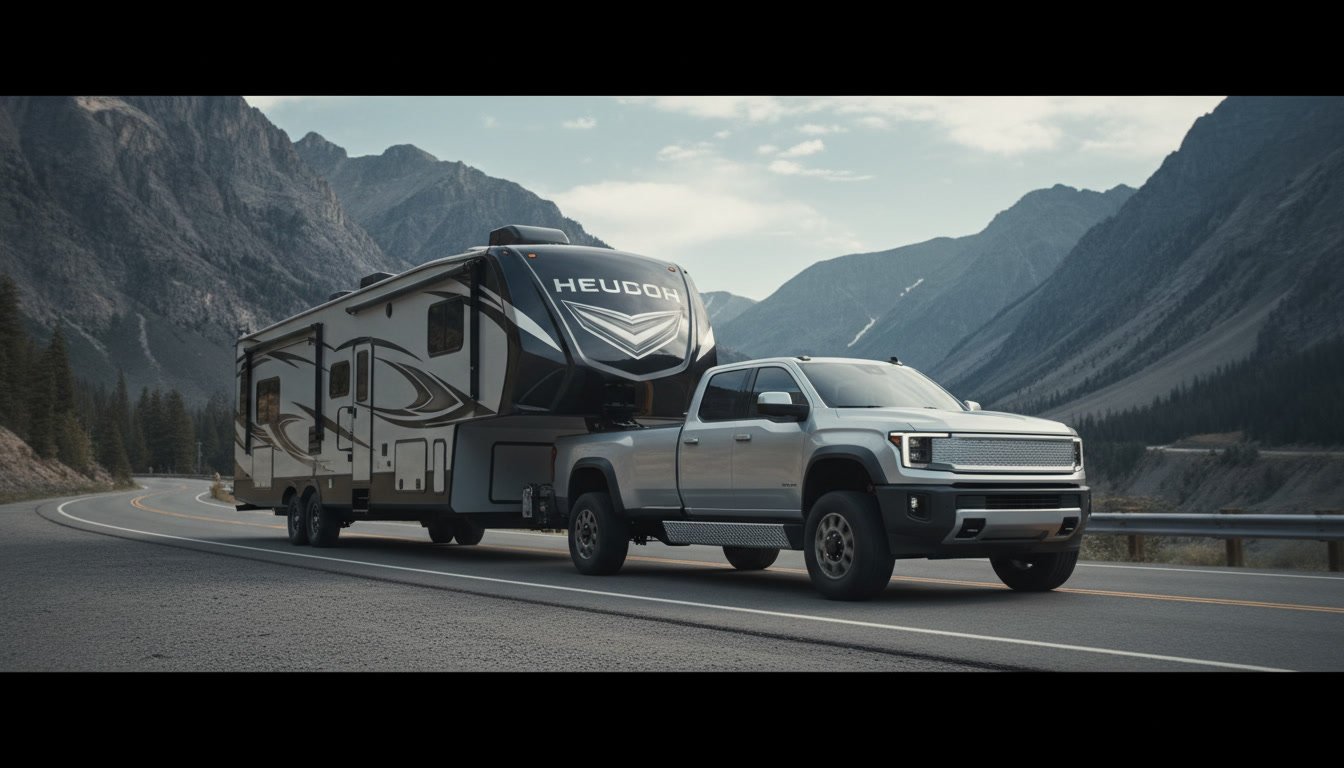
Most electric vehicle manufacturers require flatbed towing to avoid drivetrain damage. Unlike gas cars with traditional transmissions that can coast in neutral, many EVs use single-speed reduction gears directly connected to the electric motors. When the wheels turn while the vehicle is off, these motors can generate unwanted voltage or suffer mechanical wear.
Tesla’s official towing guidelines state that all four wheels must be off the ground during transport. Ford’s Mustang Mach-E manual includes similar language. Violating these guidelines doesn’t just risk mechanical damage; it can void warranty coverage on the electric drivetrain, leaving the owner with a five-figure repair bill.
Professional towing services in Seattle maintain flatbed trucks specifically for this purpose. Smith Towing uses equipment rated for the higher weight capacities that electric SUVs and trucks demand, ensuring safe transport without risking vehicle systems or operator safety.
High Voltage Safety Protocols During EV Recovery
Electric vehicles carry battery packs operating at 400 to 800 volts, compared to the 12-volt systems in gas vehicles. After a collision or breakdown, damaged battery enclosures can expose live electrical components. Tow operators trained in EV recovery follow specific safety steps before touching the vehicle.
First, they verify the vehicle is powered down completely, not just in accessory mode. Second, they check for visible damage to the battery pack enclosure underneath the vehicle. Orange high-voltage cables running through the cabin also require visual inspection. If any damage appears near electrical components, operators treat the vehicle as a hazard and use non-conductive equipment during loading.
This isn’t theoretical caution. Fire departments across the country have documented cases of EV batteries reigniting hours after accidents due to thermal runaway in damaged cells. Tow operators now carry thermal imaging cameras to check battery pack temperatures before and during transport.
Weight Distribution and Axle Load Calculations
A loaded tow truck must distribute weight properly between its axles to maintain safe handling. When a 4,500-pound electric sedan sits on a flatbed, that mass concentrates in the center of the bed, shifting more load to the truck’s rear axle than a lighter gas vehicle would.
Experienced operators adjust vehicle position on the flatbed to balance this load. Moving the EV forward or backward by even two feet can shift several hundred pounds between axles. Improper weight distribution reduces braking effectiveness and makes the truck harder to control, especially on wet roads or steep grades common in the Seattle area.
Commercial tow operators calculate these loads before every job. They factor in the vehicle’s curb weight, the tow truck’s own weight, and the weight capacity rating on both the bed and the truck’s axles. For particularly heavy electric trucks like the GMC Hummer EV, which exceeds 9,000 pounds, operators may need to deploy heavy-duty wreckers instead of standard flatbeds.
Comparing Fuel-Based Emergency Situations
When a gas vehicle runs out of fuel, the solution is straightforward. A technician delivers a few gallons of gasoline, the driver starts the engine, and the situation resolves in minutes. Electric vehicles don’t offer the same simple fix when their batteries fully deplete.
An EV with a completely drained battery can’t accept a rapid charge immediately. The battery management system often requires a slow trickle charge first to protect the cells from damage. This means a roadside charging solution might take 30 minutes just to add enough power to move the vehicle a short distance, unlike the five-minute fuel delivery for a gas car.
Most roadside assistance situations involving EVs therefore require flatbed transport to the nearest charging station or the owner’s home. This extends service time and requires different equipment than a simple fuel delivery, though drivers who plan their charging stops rarely face this scenario.
Mechanical Differences That Affect Recovery Procedures
Gas vehicles have multiple pickup points where tow operators can safely attach chains or straps. The frame rails, subframes, and suspension components are all designed to handle loads during recovery. Electric vehicles often have more restrictive attachment points due to the battery enclosure occupying the space where frame rails would normally run.
Many EVs use unibody construction with the battery pack as a semi-structural element. Attaching recovery equipment to the wrong point can puncture the battery enclosure or damage cooling lines that run along the pack’s perimeter. Tow operators refer to manufacturer-specific recovery guides that show approved lifting and attachment points for each model.
For example, Tesla provides detailed diagrams showing exactly where wheel chocks, jack pads, and tie-down straps should contact the vehicle. Using any other points risks damage the owner’s insurance might not cover. Professional tow companies maintain digital libraries of these guides for every major EV model on the road.
Insurance and Liability Considerations for Heavy Vehicles
Towing companies carry liability insurance that covers vehicle damage during transport. Premium costs for this coverage increase when operators handle vehicles above certain weight thresholds. An electric truck weighing 7,500 pounds costs more to insure during towing than a 3,500-pound gas sedan because the potential for property damage scales with mass.
This insurance reality affects pricing and service availability. Not every towing company chooses to invest in the heavy-duty equipment and higher insurance premiums needed to safely handle the heaviest electric vehicles. Those that do, including Smith Towing, often serve this niche market specifically because many competitors avoid it.
Vehicle owners should verify their own insurance policies cover the specific towing requirements their EV manufacturer mandates. Some policies include flatbed-only towing for electric vehicles, while others treat all towing identically. Knowing this detail before a breakdown occurs prevents disputes and delays during an actual emergency.
Real World Weight Comparisons Across Vehicle Classes
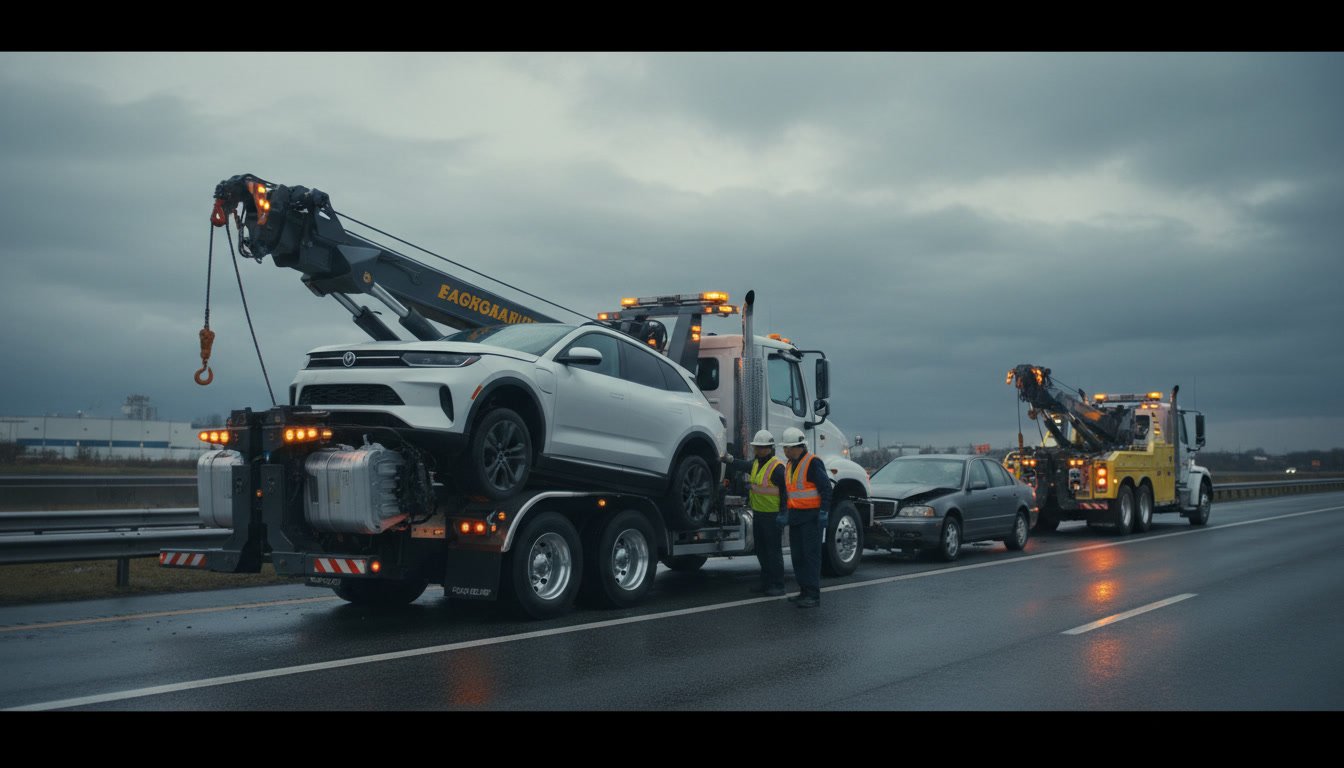
Looking at specific models shows the weight gap clearly. A Honda Accord weighs 3,131 pounds in base trim. A Chevrolet Bolt EV, a smaller car with less interior space, weighs 3,589 pounds. The Ford F-150 Lightning electric truck weighs between 6,015 and 6,893 pounds depending on battery size, while a comparable gas F-150 weighs 4,021 to 5,014 pounds.
This 1,000 to 2,000 pound difference per vehicle might seem modest, but it determines whether a standard tow truck can handle the job or whether a heavy-duty unit must respond. It affects how quickly operators can safely load the vehicle and how carefully they must drive during transport.
The weight gap will likely persist even as battery technology improves. Manufacturers consistently choose to use lighter batteries to increase range rather than reduce vehicle weight, meaning future EVs will continue requiring weight-appropriate towing equipment rather than converging with gas vehicle weights.
Training Requirements for EV-Capable Tow Operators
Tow truck operators handling electric vehicles need training beyond standard certification. Programs now teach high-voltage safety, battery pack identification, proper disconnection procedures for 12-volt auxiliary systems, and how to recognize thermal runaway warning signs.
The Towing and Recovery Association of America offers specialized courses covering EV recovery. Topics include using non-conductive gloves and tools, understanding manufacturer-specific shut-down procedures, and recognizing which vehicle damage patterns require hazmat protocols. Operators who complete this training can safely handle situations their traditionally-trained colleagues would need to refuse.
This specialized knowledge becomes more valuable as EV adoption grows. Seattle and surrounding areas see high electric vehicle ownership rates, meaning local towing companies that invest in this training and equipment gain competitive advantages over those that don’t. Customers increasingly ask specifically for EV-capable towing services rather than accepting whoever arrives first.
Getting the Right Service When Your Vehicle Needs Transport
Whether you drive a gas sedan or an electric SUV, choosing a towing service with appropriate equipment prevents damage and delays. Battery weight and electrical systems make EVs more demanding to transport, but operators with proper training and flatbed capacity handle these vehicles safely every day.
Weight differences between electric and gas vehicles affect every aspect of the towing process, from equipment selection to safety protocols to transport techniques. As batteries grow larger to extend range, these considerations become more critical rather than less. Knowing what your specific vehicle requires before an emergency occurs helps you make informed decisions when time matters.
If your electric or gas vehicle needs transport in the Seattle area, Smith Towing operates flatbed trucks equipped to handle vehicles across the weight spectrum, from compact cars to heavy electric trucks. Our operators understand manufacturer-specific towing requirements and carry the certifications needed to work safely around high-voltage systems. Reach out at +18633732644 whenever you need reliable transport that protects your vehicle and gets you back on the road.