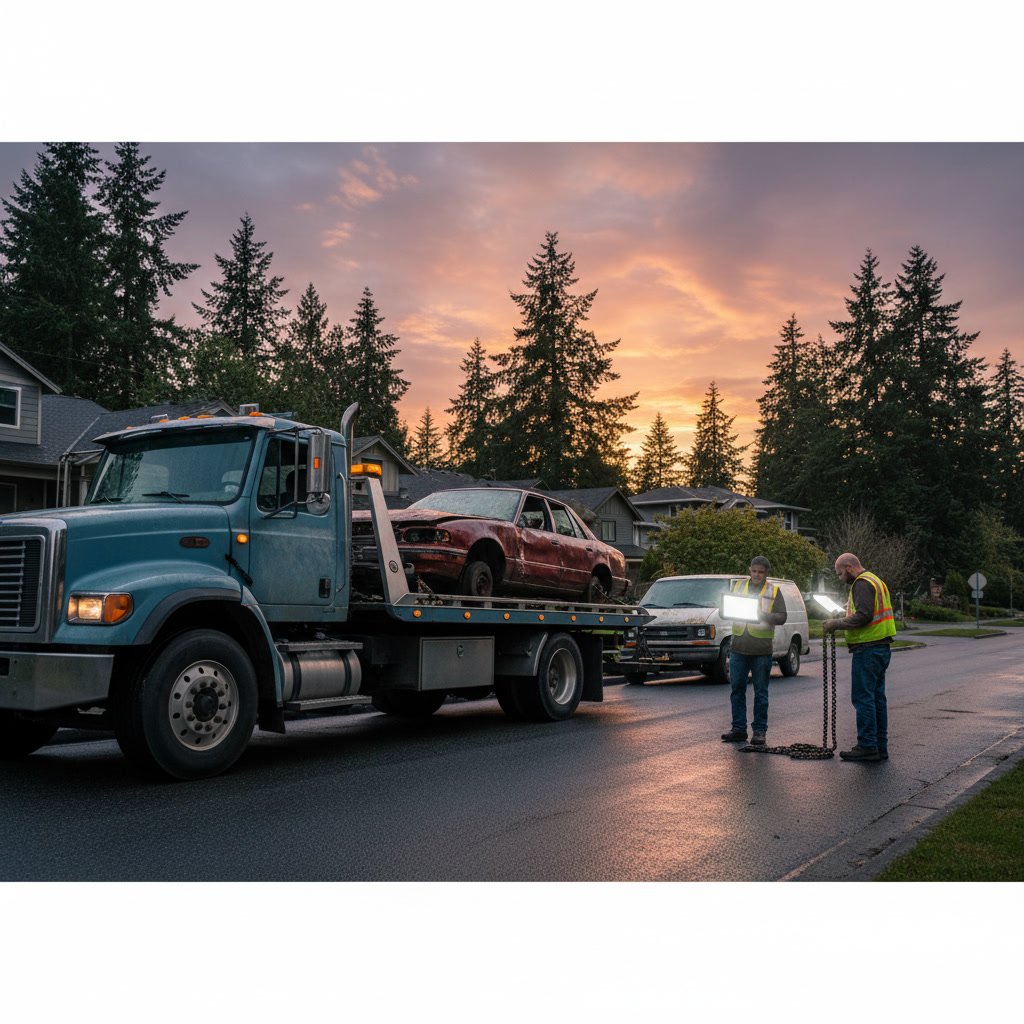

Getting into a car accident is stressful. Your heart is pounding, you’re checking for injuries, and you’re trying to figure out what to do next. One of the first questions that comes to mind is how to get your damaged vehicle off the road safely. Understanding how accident towing Seattle services work can take some of the uncertainty out of an already difficult situation and help you make informed decisions when seconds count.
This guide walks you through the entire emergency towing process after an accident in Seattle, from the initial call to final delivery. You’ll learn what happens when you request a tow, what your rights are, how long it takes, and what costs to expect.
What Happens Immediately After a Seattle Accident
The moments after a collision are critical for safety and documentation. Before thinking about towing, make sure everyone is safe and call 911 if there are injuries or if the accident blocks traffic.
Once the immediate safety concerns are addressed, Seattle Police or Washington State Patrol will typically arrive to document the scene. Officers assess whether vehicles need to be moved to prevent further accidents or traffic disruption. If your car is drivable, they may ask you to move it to the shoulder or a nearby parking lot.
When your vehicle cannot be driven due to damage, mechanical failure, or safety concerns, you’ll need emergency towing. Police may recommend a tow company, but you have the right to choose your own provider in most situations.
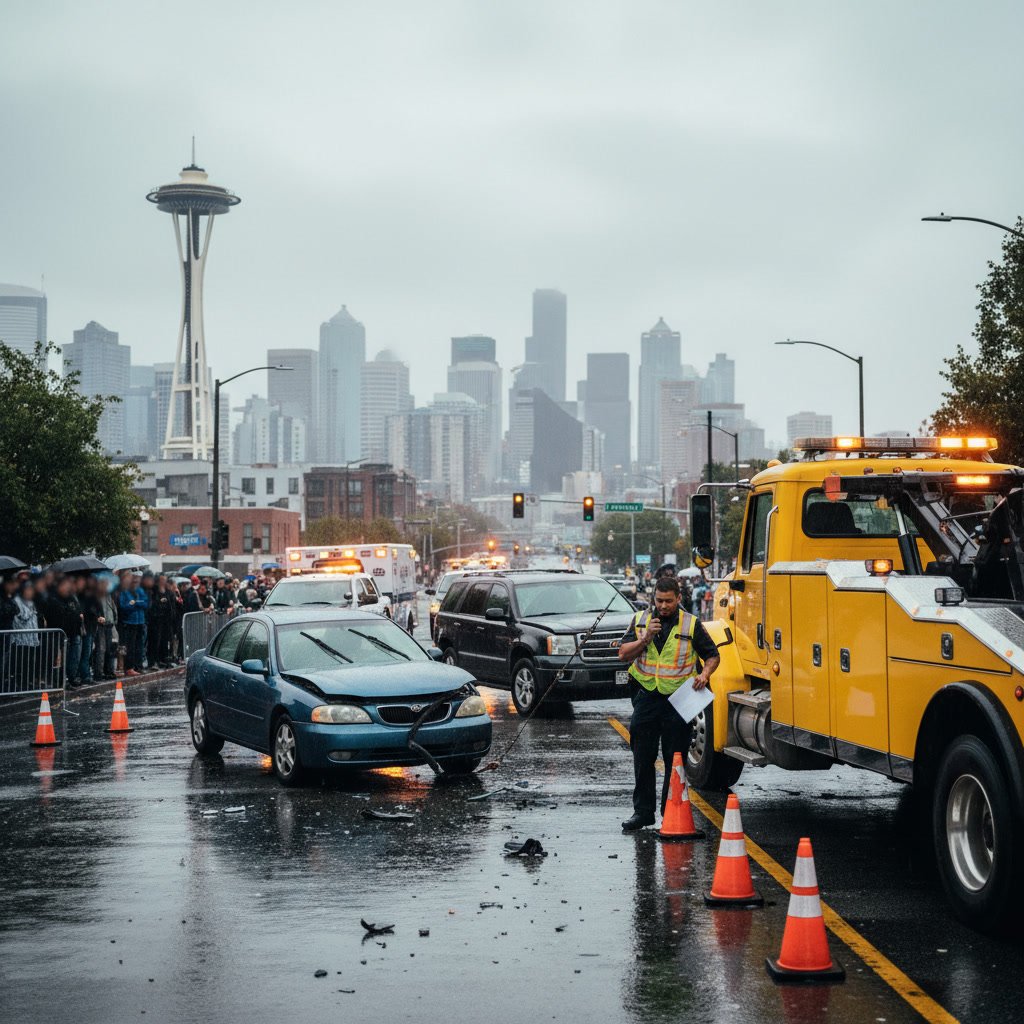
How Accident Towing Seattle Services Respond
When you call for accident towing Seattle assistance, the process follows a predictable pattern designed to get your vehicle safely off the road as quickly as possible.
The Initial Call and Dispatch
When you contact a towing company, the dispatcher will ask for your exact location, a description of your vehicle, the type and extent of damage, and where you want the car towed. They’ll also confirm whether the vehicle is on a highway, side street, or in a hazardous position.
Professional companies like Smith Towing maintain 24/7 dispatch and keep multiple trucks on standby throughout the seattle, WA 98134 area. This ensures fast response times even during peak hours or severe weather.
Response Time Expectations
Most tow companies aim to reach accident scenes within 30 to 45 minutes in Seattle’s urban areas. Response times can vary based on traffic conditions, distance, and the number of trucks available.
Highway accidents often receive priority because they pose greater safety risks and traffic disruption. If you’re in a dangerous location, police may arrange for immediate towing through their rotation system, though you can still request your preferred provider.
What the Tow Operator Does On Scene
When the tow truck arrives, the operator will assess the vehicle damage, check for fluid leaks or hazards, and determine the safest way to load your car. They’ll document the vehicle’s condition with photos to protect both you and the company.
The driver will ask you to remove personal belongings and sign a tow authorization form. This document lists where the vehicle is going, estimated costs, and your contact information. Always read this form before signing and keep your copy.
Your Rights During Emergency Towing in Seattle
Washington state law protects vehicle owners during towing situations. You have specific rights that towing companies must respect, even during emergencies.
You have the right to choose your own towing company unless your vehicle poses an immediate safety hazard that requires instant removal. Police cannot force you to use a specific company simply because it’s on their rotation list.
You also have the right to know where your vehicle is being towed before it leaves the scene. The driver must provide you with the storage facility’s name, address, and phone number. You can request that your car be taken to a specific repair shop, your home, or a storage facility of your choice, though this may affect the cost.
Towing companies must provide an itemized invoice showing all charges. Washington state regulates maximum rates for nonconsent tows, which are tows performed at police request without the owner present.
Pro Tip: Take photos of your vehicle before it’s loaded onto the tow truck. This documentation protects you if any additional damage occurs during transport or storage.
Types of Tow Trucks Used for Accident Recovery
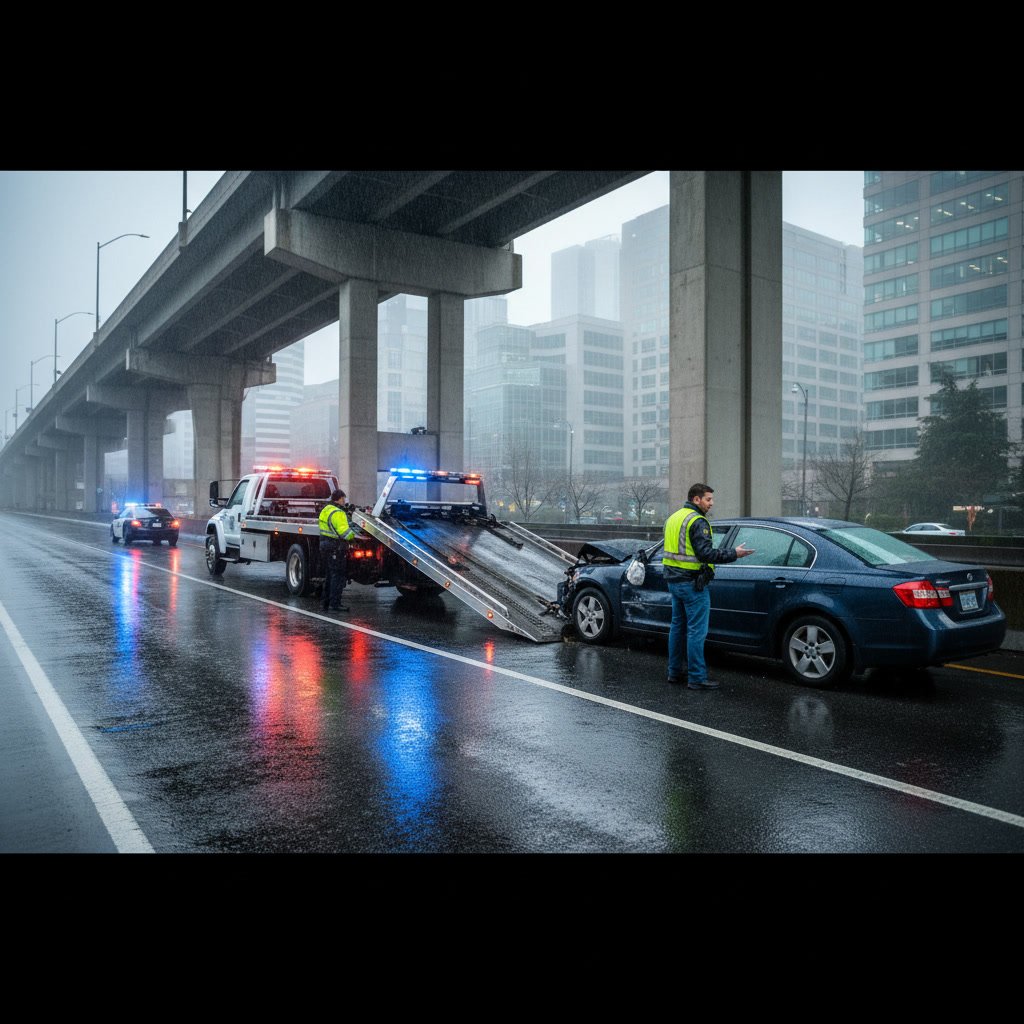
Not all tow trucks are the same. The type of truck dispatched depends on your vehicle’s size, damage level, and drivetrain configuration.
Flatbed Tow Trucks
Flatbed trucks are the safest option for accident towing because they lift the entire vehicle off the ground. This prevents additional damage to the transmission, drivetrain, or wheels during transport. Most professional services prefer flatbeds for accident recovery, especially for all-wheel-drive vehicles, luxury cars, or vehicles with significant front-end or undercarriage damage.
If you own a high-value or AWD vehicle, you might want to read more about why flatbed towing protects these vehicles during transport.
Wheel-Lift Tow Trucks
Wheel-lift trucks use a metal yoke that slides under the front or rear wheels, lifting one end of the vehicle while the other end rolls. These trucks work well for minor accidents where the vehicle is still in good mechanical condition but cannot be driven safely.
Heavy-Duty Wreckers
For accidents involving trucks, SUVs, or commercial vehicles, heavy-duty wreckers provide the power and equipment needed for safe recovery. These specialized trucks can handle vehicles weighing up to 75,000 pounds and can perform complex recoveries from ditches, embankments, or rollover positions.
Where Your Vehicle Goes After Accident Towing Seattle
The destination for your towed vehicle depends on several factors, including insurance requirements, the severity of damage, and your personal preferences.
Tow Yard or Storage Facility
If you don’t specify a destination, most accident towing Seattle services will take your vehicle to their secure storage yard. This is common when accidents happen late at night, when you’re unsure about next steps, or when you need time to contact your insurance company.
Storage facilities charge daily fees that typically range from 25 to 75 dollars per day in the Seattle area. These fees start accumulating immediately, so it’s important to arrange for vehicle release or transfer as soon as possible.
Auto Repair Shop
Many people request direct towing to their preferred repair shop. This saves time and eliminates storage fees. However, you should confirm that the shop can accept your vehicle immediately, especially if the accident happens outside business hours.
Your insurance company may have preferred repair facilities. Check your policy or contact your adjuster before deciding where to send the vehicle.
Your Home or Other Location
If the damage is minor or you plan to repair the vehicle yourself, you can request towing to your home. Keep in mind that some neighborhoods or homeowner associations restrict damaged vehicles from being parked on residential streets for extended periods.
Vehicles that are totaled or beyond economical repair might need to go to a salvage yard or junk car buyer. If you’re dealing with a vehicle that can’t be repaired, you can learn more about getting rid of a car that doesn’t run in the Seattle area.
Costs and Payment for Accident Towing
Understanding towing costs helps you plan financially and avoid surprises. Emergency accident towing typically costs more than standard service calls due to the urgent response and additional equipment required.
Base tow rates in Seattle generally range from 75 to 200 dollars for the hookup and first few miles, with additional charges of 3 to 7 dollars per mile after that. Flatbed service, heavy-duty equipment, or complex recovery situations increase these costs.
After-hours service, weekends, and holidays may include surcharges of 50 to 100 dollars. Winching, debris cleanup, or fluid spill management add separate charges based on time and materials.
Insurance Coverage for Accident Towing
Most auto insurance policies include some level of towing coverage, though limits vary widely. Liability-only policies typically don’t cover towing unless you’ve added roadside assistance to your policy.
Comprehensive and collision coverage often includes towing as part of the claim. Your insurer will either pay the towing company directly or reimburse you after you submit the receipt. Many policies cap towing reimbursement at 50 to 100 dollars per incident, so you may owe any amount above that limit.
Payment Methods and Timing
Most towing companies require payment before releasing your vehicle from storage. They accept cash, credit cards, and sometimes insurance assignment of payment. If you cannot pay immediately, the company has the legal right to place a lien on your vehicle and eventually sell it to recover costs.
Keep all receipts and documentation for insurance claims and tax purposes. Accident-related towing may be deductible or recoverable through the at-fault party’s insurance.

Working With Police and Insurance After the Accident
Coordinating with law enforcement and your insurance company is a critical part of the accident towing process that affects everything from liability to reimbursement.
Getting the Police Report
Seattle Police and Washington State Patrol create accident reports that document the crash details, involved parties, and officer observations. You’ll need this report number for your insurance claim.
The police report will note if your vehicle was towed, which company performed the tow, and where the vehicle was taken. This documentation helps insurance companies verify the towing charges and process your claim faster.
Notifying Your Insurance Company
Contact your insurance company as soon as safely possible after the accident, ideally within 24 hours. Provide them with the police report number, tow company information, and storage location.
Your insurer will assign an adjuster who will inspect the vehicle to determine if it’s repairable or a total loss. Until the inspection is complete, avoid authorizing major repairs or signing any settlement agreements.
What to Do If Your Car Is Totaled
When repair costs exceed your vehicle’s value, insurance companies declare it a total loss. This decision significantly impacts what happens next with your towed vehicle.
Once the vehicle is declared totaled, the insurance company will make you an offer based on the car’s pre-accident market value. If you accept, they’ll pay off any loan balance and give you the remaining amount. The insurer then takes ownership of the vehicle and arranges for its transfer to a salvage auction.
You can sometimes keep the totaled vehicle by accepting a reduced payout. This option makes sense if you want to repair it yourself or sell it for parts. However, you’ll still need to get it out of the tow yard to avoid ongoing storage fees.
If dealing with a totaled vehicle feels overwhelming, professional junk car removal services can handle the entire process, often picking up directly from the tow yard.
How to Choose a Reliable Accident Towing Company
Not all towing companies provide the same level of service, especially during the stress of an accident. Choosing a reputable provider protects your vehicle and your wallet.
Look for companies with 24/7 availability, proper licensing and insurance, and positive customer reviews. A professional service will have trained operators, well-maintained equipment, and transparent pricing.
Local companies often provide better service than national chains because they know the area, have shorter response times, and build their reputation within the community. Smith Towing has served the Seattle, Redmond, Kirkland, and Edmond areas for years, offering reliable emergency response and transparent billing.
Ask about their fleet composition to ensure they have the right equipment for your vehicle type. Companies that operate multiple flatbed trucks can better handle luxury cars, AWD vehicles, and heavily damaged cars without causing additional harm.
Key Takeaway: Save a trusted towing company’s number in your phone before you need it. When you’re shaken after an accident, you won’t have time to research companies or compare reviews.
Preventing Common Accident Towing Problems
A few simple steps can help you avoid the most common issues people face during accident towing in Seattle.
Remove all valuables and personal items from your vehicle before it’s towed. Towing companies aren’t responsible for items left inside, and storage yards may have limited security. Take your registration, insurance documents, and anything else you’ll need while the car is being repaired.
Get the driver’s name, company name, and a phone number where you can reach them. Having this information makes it easier to check on your vehicle or ask questions later.
Understand the storage facility’s hours and release procedures. Some yards have limited access hours or require advance notice for vehicle pickup. Knowing these details helps you retrieve your car quickly once repairs are complete or insurance matters are settled.
Document everything. Take photos, keep receipts, save emails, and write down names and phone numbers of everyone you speak with. This documentation protects you if disputes arise about damage, costs, or insurance claims.
Frequently Asked Questions
How long does accident towing Seattle typically take to arrive?
Most professional towing companies in Seattle arrive within 30 to 45 minutes of your call, depending on your location and traffic conditions. Highway accidents often receive faster response because they pose greater safety risks. Companies with multiple trucks and strategic positioning throughout the metro area can usually provide the quickest service.
Can I refuse the tow truck the police called?
In most situations, yes. You have the right to choose your own towing company unless your vehicle poses an immediate safety hazard that requires instant removal. If police have already called a truck and it arrives before your preferred provider, you may owe a cancellation or service call fee to the first company.
How much does accident towing cost in Seattle?
Accident towing in Seattle typically costs between 75 and 200 dollars for the base service, plus 3 to 7 dollars per mile. Additional charges apply for flatbed service, heavy-duty equipment, after-hours calls, or complex recovery situations. Storage fees at the tow yard range from 25 to 75 dollars per day.
Will my insurance cover the towing charges?
Coverage depends on your policy type. Comprehensive and collision policies usually include towing as part of accident claims, though reimbursement limits often cap at 50 to 100 dollars. Liability-only policies don’t cover towing unless you’ve added roadside assistance. Contact your insurer immediately after the accident to understand your coverage.
What happens if I can’t afford to get my car out of the tow yard?
If you cannot pay towing and storage fees, the company can place a lien on your vehicle. After a legally required waiting period, they can sell the vehicle at auction to recover their costs. Contact the towing company immediately to discuss payment plans or work with your insurance company to arrange direct payment.
Getting Help When You Need It Most
Understanding how accident towing Seattle works reduces stress during an already difficult situation. Knowing what to expect, what your rights are, and how to choose a reliable provider helps you make better decisions when time is critical.
The key is preparation. Save a trusted towing company’s contact information now, understand your insurance coverage, and know the basic process so you’re ready if the worst happens.
Smith Towing provides 24/7 emergency accident towing throughout Seattle, Redmond, Kirkland, and Edmond. Our trained operators respond quickly with the right equipment to safely transport your vehicle wherever it needs to go. If you need emergency towing after an accident, call +18633732644 for immediate assistance.