
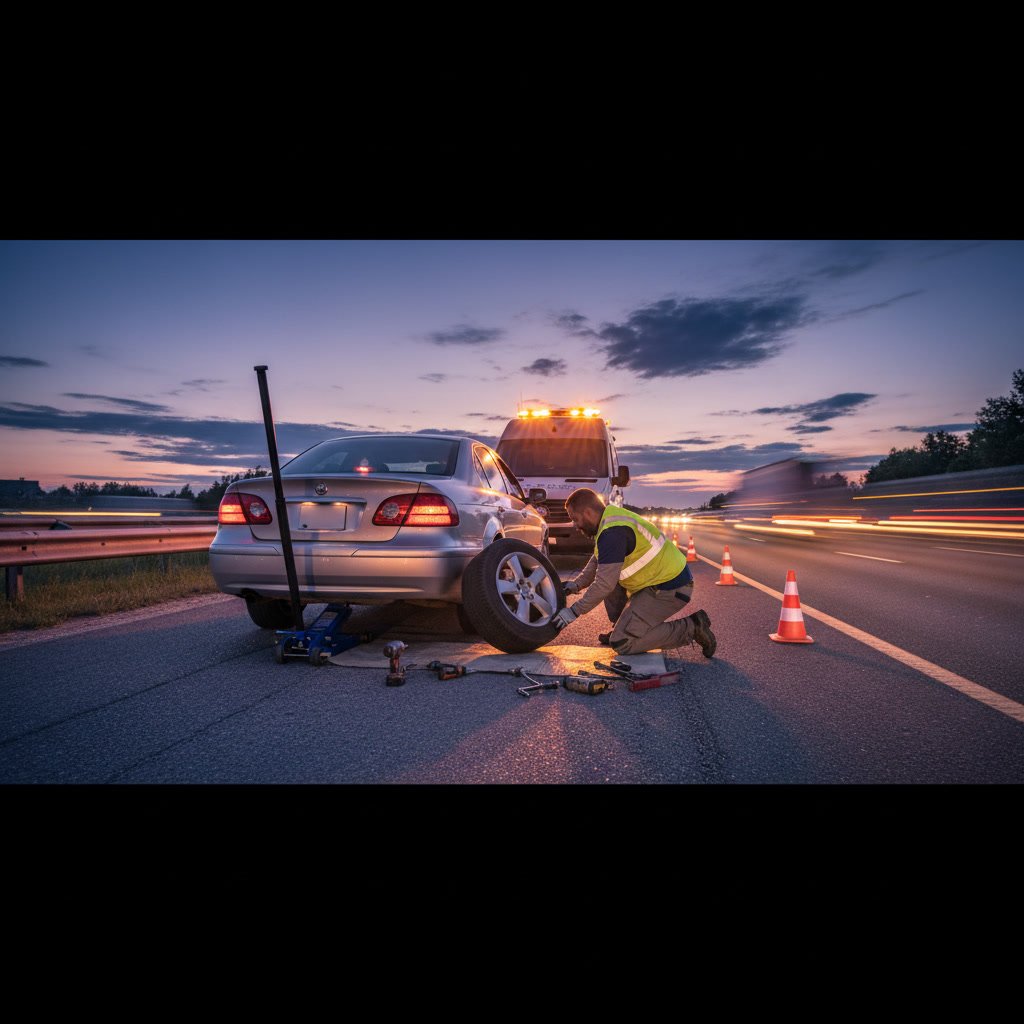
A professional roadside tire change follows a specific safety protocol to protect you, your vehicle, and other drivers. Technicians assess your location, stabilize your vehicle, remove the damaged tire, and install your spare using professional-grade equipment. The entire process typically takes 15 to 30 minutes when performed by trained professionals who arrive with the right tools and experience.
Why You Shouldn’t Change Your Own Tire on a Busy Road
Changing a tire alongside traffic puts you at serious risk. Most highways and busy streets lack adequate shoulder space, forcing you to work inches from moving vehicles. Studies show that roadside emergencies account for hundreds of injuries each year, many preventable with professional help. You also face the challenge of loosening lug nuts that may have been tightened with an impact wrench at 100 foot-pounds of torque, far beyond what a standard tire iron can handle.
Professional technicians carry hydraulic jacks rated for heavier loads, battery-powered impact wrenches, and reflective safety gear designed for roadside work. They know how to position equipment on uneven surfaces and can identify when a spare tire is unsafe to use.
What Technicians Check Before Starting the Work
Before touching any tools, a technician evaluates your exact situation. They look at your vehicle’s position relative to traffic, the road surface angle, and whether the car is stable. If you’re on a slope or soft shoulder, they may reposition your vehicle or use wheel chocks to prevent rolling.
The technician also inspects your spare tire. Many drivers discover too late that their spare is flat, cracked, or missing entirely. A professional will check the spare’s air pressure and tread depth before proceeding. If the spare is unusable, they’ll recommend a tow to a nearby repair shop instead of leaving you with a false sense of security.
Setting Up the Safety Zone Around Your Vehicle
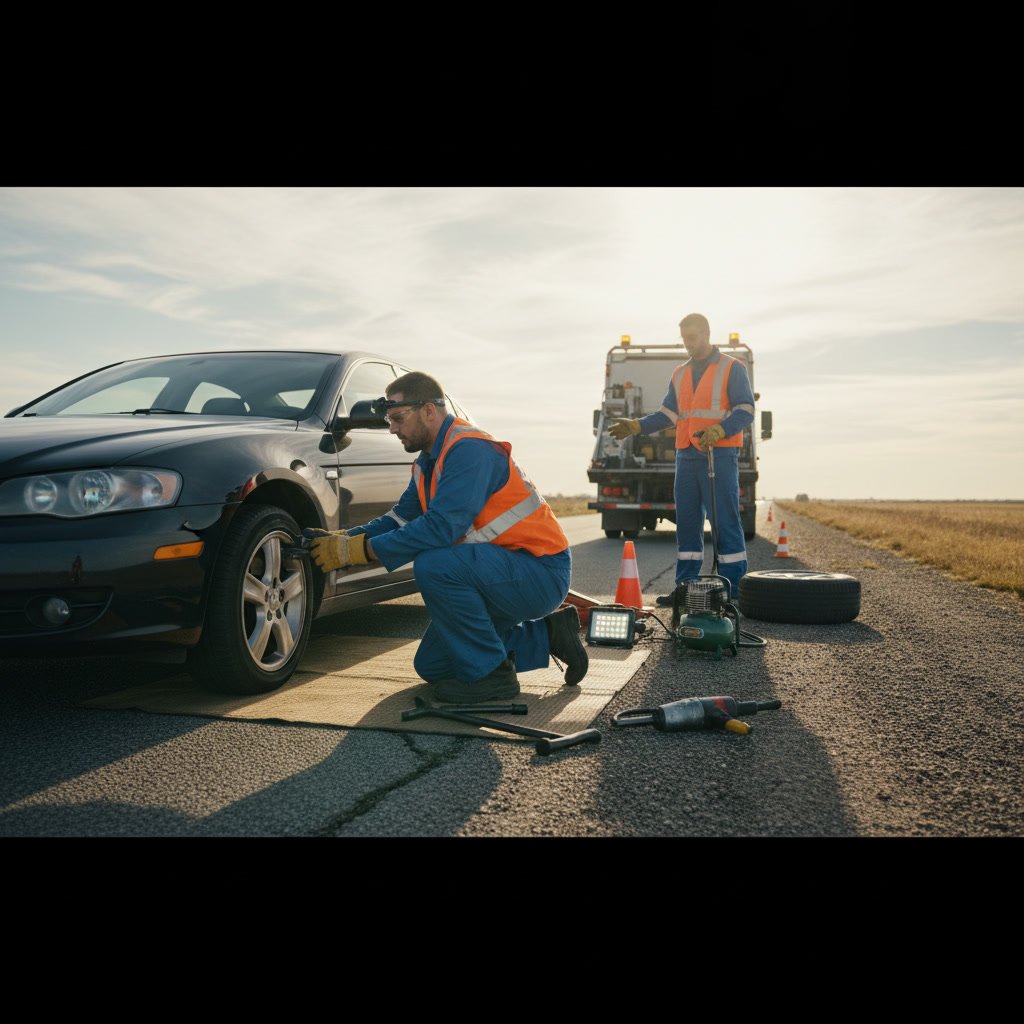
Safety setup happens first. Technicians place reflective triangles or LED flares 50 to 100 feet behind your vehicle to alert oncoming traffic. They wear high-visibility vests that meet ANSI Class 3 standards, visible from 1,000 feet in daylight and at night.
The service vehicle parks with emergency lights active, creating a protective buffer between your car and traffic. This barrier gives the technician space to work without constantly watching for approaching vehicles. In some cases, especially on narrow roads, they may request police assistance to manage traffic flow.
How Professionals Lift Your Vehicle Safely in Seattle
Lifting a vehicle on an uneven roadside requires different techniques than a garage floor. Technicians identify the manufacturer-specified jack points, usually marked in your owner’s manual and reinforced areas of the frame. Placing a jack elsewhere risks damaging your rocker panels or causing the vehicle to slip.
Professional hydraulic jacks distribute weight more evenly than the scissor jacks included with most vehicles. The technician pumps the jack slowly, watching for any shift or instability. Once the wheel clears the ground by two to three inches, they place a jack stand as a backup safety measure, though this step depends on the specific situation and available equipment.
Removing the Damaged Tire Step by Step
Lug nut removal follows a specific star pattern to prevent warping the brake rotor. Technicians use an impact wrench set to the correct torque, breaking each nut loose before fully removing any of them. This maintains even pressure across the wheel hub.
After removing all lug nuts, the technician pulls the tire straight off the hub. They inspect the wheel studs for damage, rust, or stripped threads that could prevent the spare from seating properly. Any debris on the hub surface gets cleaned away to ensure the spare mounts flush against the metal.

Installing and Securing the Spare Tire
The spare tire slides onto the exposed wheel studs. Technicians align the holes carefully to avoid cross-threading the lug nuts, which would render them useless. They hand-tighten each nut first, again using the star pattern to keep the wheel centered on the hub.
Once hand-tight, the technician lowers the vehicle until the spare tire touches the ground but doesn’t bear full weight. This prevents the wheel from spinning while they apply final torque. Using a calibrated torque wrench, they tighten each lug nut to the vehicle manufacturer’s specification, typically between 80 and 100 foot-pounds for passenger cars. Over-tightening can strip threads or warp rotors, while under-tightening risks the wheel coming loose while driving.
Post Installation Inspection and Pressure Check
After lowering the vehicle completely, the technician rechecks each lug nut to confirm proper torque. They also measure the spare tire’s air pressure with a digital gauge. Most compact spare tires require 60 PSI, significantly higher than standard tires, and many sit underinflated after months in your trunk.
If the spare needs air, technicians carry portable compressors to inflate it on the spot. They’ll advise you of the spare’s speed rating, usually 50 mph maximum for compact donuts, and the maximum safe driving distance, typically 50 to 70 miles. This information prevents drivetrain damage on all-wheel-drive vehicles, which can occur when tire diameters don’t match.
What Happens to Your Flat Tire
The damaged tire gets placed in your trunk or cargo area unless it’s completely shredded. Technicians secure it to prevent rolling around during transport. They’ll point out the damage, whether it’s a puncture, sidewall tear, or tread separation, and explain whether repair is possible.
Most punctures in the tread area smaller than a quarter-inch can be repaired if they’re not near the sidewall. Sidewall damage almost always requires tire replacement because that area flexes constantly and can’t be safely patched. If you’re dealing with an older vehicle that’s accumulating problems, you might consider whether getting rid of your vehicle makes more financial sense than continued repairs.
How Long a Professional Service Takes Compared to DIY
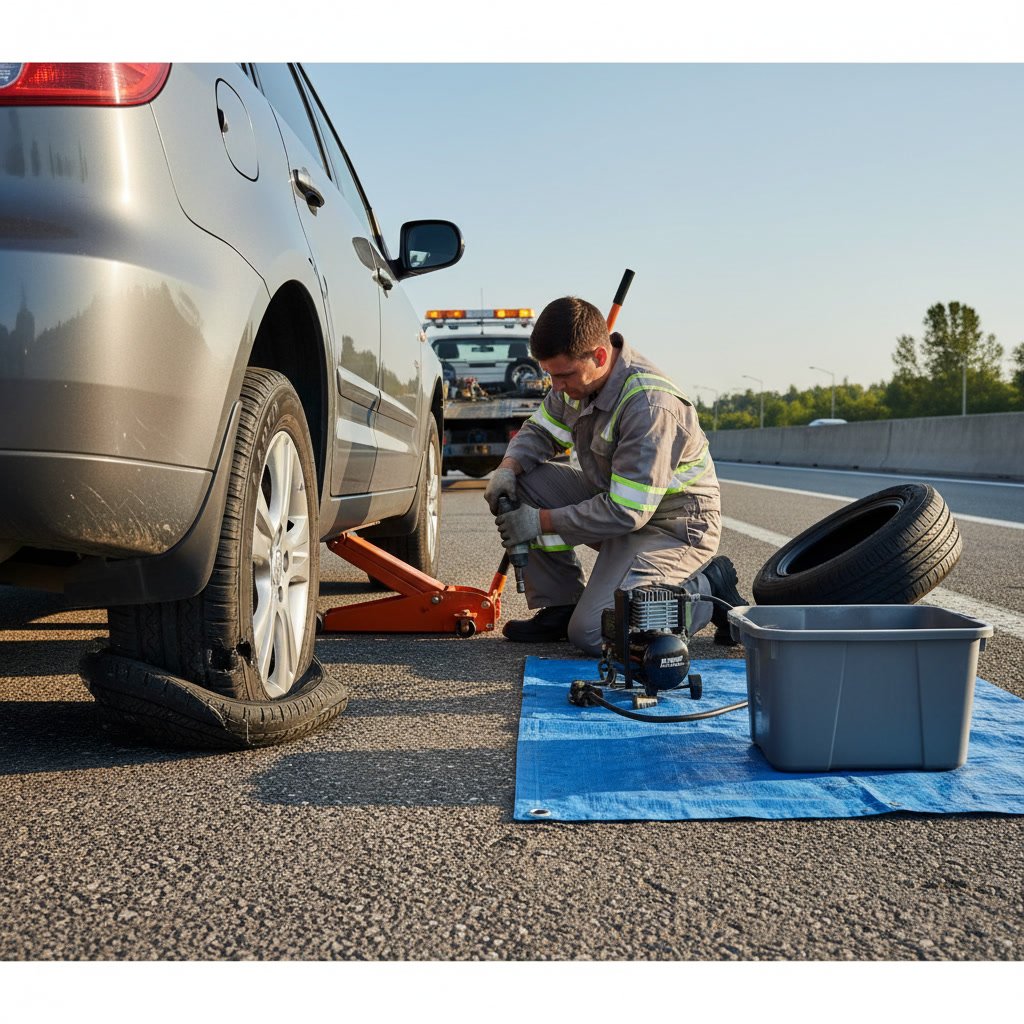
An experienced technician completes a roadside tire change in 15 to 30 minutes from arrival to departure. This includes setup, the actual tire swap, and safety checks. By contrast, an untrained driver often struggles for 45 minutes or more, especially when lug nuts won’t budge or the jack won’t fit properly under the vehicle.
The time difference comes from having the right tools immediately available and knowing the exact procedure for hundreds of different vehicle models. Technicians don’t waste time reading owner’s manuals or searching for jack points. For drivers unfamiliar with their vehicle’s systems, professional help through roadside assistance eliminates guesswork and physical strain.
When a Spare Tire Won’t Solve the Problem
Some situations require a tow instead of a tire change. If your vehicle has a damaged wheel, bent suspension components, or brake system problems exposed by the flat, driving on a spare could cause additional damage. Technicians identify these issues during inspection.
Vehicles without spare tires, increasingly common in newer models equipped only with tire repair kits, need towing when the damage exceeds what sealant can fix. All-wheel-drive and four-wheel-drive vehicles present another complication because mismatched tire diameters can damage the transfer case or differential, making a tow the safer choice. Response times for these services vary, and understanding what affects how quickly help arrives helps you plan accordingly.
Getting Back on the Road With Confidence
A professional roadside tire change gets you moving again quickly and safely. Technicians handle the physical work, manage traffic risks, and confirm that your spare is properly installed and inflated. You receive clear guidance on driving limitations and next steps, whether that means visiting a tire shop within the next few miles or continuing your trip with reasonable caution.
Smith Towing provides professional tire change services across the greater Seattle area, with technicians who carry commercial-grade equipment and respond quickly when you’re stranded. When you need help with a flat tire or any other roadside emergency, call +18633732644 for fast, reliable service that gets you back on the road safely.