Your car won’t start. You turn the key and hear nothing but a weak clicking sound or complete silence. The dashboard lights are dim or dead. You’re stuck in a parking lot, your driveway, or worse, on the side of the road during Seattle’s unpredictable weather. A dead battery is one of the most common automotive emergencies, and knowing what happens during a roadside assistance call for a jumpstart service Seattle can give you peace of mind when you need it most.
This guide walks you through the complete process of a professional jumpstart, from the moment you call for help to when your engine roars back to life. You’ll learn exactly what trained technicians do, why their methods are safer than amateur attempts, and what happens if your battery needs more than a simple jump.
The Initial Call and Dispatch
When you contact a professional towing company like Smith Towing for a jumpstart service Seattle, the dispatcher collects essential information to send the right help. You’ll be asked for your exact location, vehicle make and model, and a description of what’s happening when you try to start the car.
The dispatcher also asks about your surroundings. Are you in a safe location? Is your vehicle blocking traffic? Are you in a parking garage with low clearance? These details determine which service vehicle responds and how quickly the technician can reach you.
Most professional services in seattle, WA 98134 aim for arrival times between 20 and 45 minutes, depending on traffic conditions and your location. During peak hours or severe weather, times may extend, but dispatchers provide realistic estimates based on current conditions.
What the Technician Does Upon Arrival
The first thing a professional technician does is assess the situation. They don’t immediately hook up jumper cables. Instead, they check several factors that determine whether a jumpstart is appropriate and safe.

The technician inspects your battery’s physical condition. They look for obvious damage like cracks in the battery case, bulging sides, or corrosion around the terminals. A cracked or damaged battery can leak acid or even explode during a jumpstart attempt, making visual inspection critical.
They also check for corrosion on the battery terminals. White, blue, or green crusty buildup around the connections can prevent proper electrical flow. Technicians often clean these terminals before attempting a jump, using a wire brush and protective equipment.
Next, they verify that your vehicle’s electrical system is actually the problem. Sometimes what seems like a dead battery is actually a faulty starter, alternator issue, or other mechanical problem. A professional can often identify these issues before wasting time on an unsuccessful jumpstart.
Safety Checks and Vehicle Positioning
Professional technicians follow strict safety protocols that most amateur attempts skip. They position their service vehicle close enough for cables to reach but far enough to allow both drivers to exit safely if needed.
Both vehicles must be in park or neutral with parking brakes engaged. The technician ensures all electrical accessories in your vehicle are turned off, including lights, radio, climate control, and any phone chargers. These devices can create power surges during the jumpstart process.
They also check the area around both vehicles for flammable materials. Batteries release hydrogen gas, which is highly flammable. Professional technicians are trained to recognize and mitigate these risks, something that distinguishes professional jumpstart service Seattle providers from well-meaning friends with jumper cables.
The Jumpstart Process Step by Step
Once safety checks are complete, the actual jumpstart follows a precise sequence. Professional technicians use commercial-grade jumper cables rated for higher amperage than standard consumer cables. These cables are typically 4 to 6 gauge with heavy-duty clamps that create secure connections.
Cable Connection Sequence
The red positive cable connects first to the positive terminal on your dead battery, then to the positive terminal on the donor vehicle or jump pack. The black negative cable connects to the negative terminal on the donor source, but here’s the important part: the other end connects to an unpainted metal surface on your vehicle’s engine block, not directly to your battery’s negative terminal.
This grounding technique reduces spark risk near the battery, where hydrogen gas might accumulate. It’s one of many small details that separate professional service from casual attempts.
Power Transfer and Engine Start
After connections are secure, the technician starts the donor vehicle or activates their professional jump starter. These commercial units deliver 1500 to 3000 peak amps, far more than the 400 to 600 amps from most consumer units.
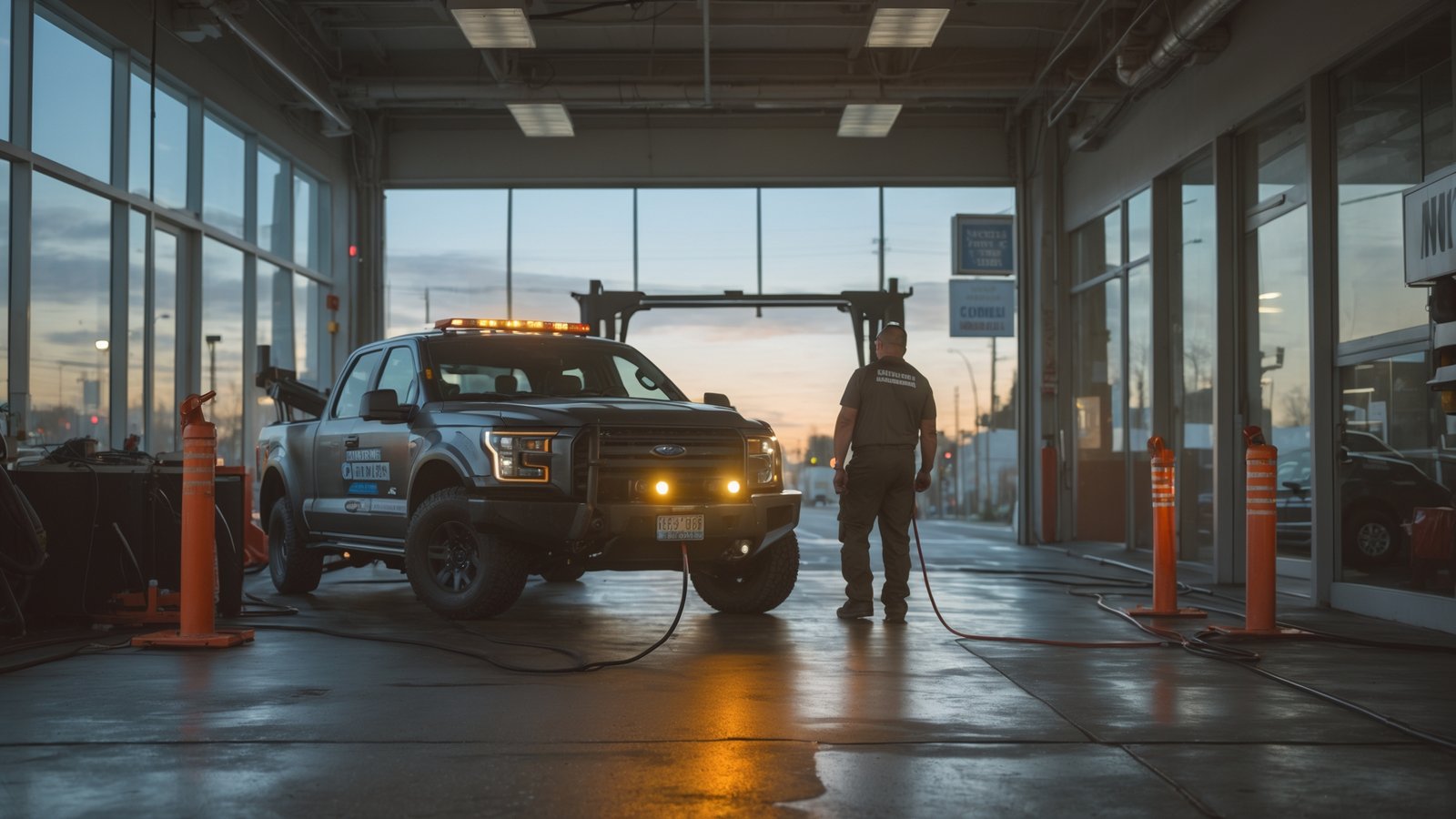
The technician waits a few minutes to allow charge transfer before attempting to start your vehicle. This patience prevents damage to your electrical system from repeated failed start attempts. When they do turn your key or press your start button, they limit cranking time to 10 or 15 seconds to avoid overheating your starter motor.
If your vehicle doesn’t start on the first attempt, they wait at least 30 seconds before trying again. This cooling period protects your vehicle’s components.
After Your Engine Starts
Once your engine is running, the work isn’t finished. The technician carefully removes the cables in reverse order: negative from your engine block, negative from donor, positive from donor, and finally positive from your battery.
They’ll keep your engine running and may ask you to turn on some electrical loads like the heater fan or headlights. This creates a buffer in your electrical system that prevents voltage spikes when the cables disconnect.
Professional technicians typically recommend that you let your vehicle run for at least 20 to 30 minutes before shutting it off. Your alternator needs this time to recharge your battery. Shutting off too soon means you might be stranded again in the next parking lot.
Battery Testing and Recommendations
Many professional services carry portable battery testers. These devices measure your battery’s voltage, cold cranking amps, and overall health in less than a minute. This test reveals whether you need a new battery or if something else drained a good battery.
A healthy 12-volt battery should read between 12.4 and 12.7 volts when the engine is off. Below 12.4 volts indicates a discharge. Below 12 volts usually means the battery can’t reliably start your vehicle.
The technician also checks your alternator’s output by measuring voltage while the engine runs. It should read between 13.7 and 14.7 volts. Readings outside this range suggest alternator problems that will kill your battery again.
When a Jumpstart Isn’t Enough
Sometimes a jumpstart attempt reveals bigger problems. If your vehicle won’t start even with a powerful professional jump pack, the issue likely isn’t the battery. Common culprits include a failed starter motor, damaged alternator, or electrical system faults.
In these cases, the technician explains what they’ve observed and discusses your options. Many times, the next step is towing your vehicle to a repair shop for proper diagnosis. Companies that offer both jumpstart and towing services can transition seamlessly without requiring a second service call.
Batteries that are physically damaged can’t be jumped safely. If the technician finds a cracked case, severe bulging, or heavy leakage, they’ll recommend immediate replacement rather than attempting a jump. Trying to jump a damaged battery creates serious safety risks.
Old batteries naturally lose capacity. If your battery is more than three to five years old, repeated jumpstarts might indicate it’s reached the end of its useful life. The technician can provide guidance about whether replacement makes more sense than another temporary fix. If your battery has truly failed beyond recovery, you might consider whether the vehicle itself is worth maintaining, especially if you’re dealing with an older car that needs frequent repairs, similar to situations where owners explore options to get rid of a vehicle that’s become unreliable.
Why Professional Service Beats DIY Attempts
Many people wonder whether calling for professional jumpstart service Seattle is necessary when a neighbor might help for free. While DIY jumpstarts work sometimes, they carry risks that professional service avoids.
Modern vehicles contain sensitive electronic systems. Computers control everything from fuel injection to safety features. Incorrect jumpstart procedures can send voltage spikes through these systems, causing damage that costs hundreds or thousands to repair. Professional technicians understand the specific requirements of different vehicle makes and models.
Consumer-grade jumper cables often can’t deliver enough amperage for larger engines or deeply discharged batteries. Undersized cables overheat and create fire risks. Commercial equipment handles these situations safely and effectively.
Pro Tip: If you need jumpstarts frequently, more than once every few months, your vehicle has an underlying problem. A professional diagnostic check can identify the root cause and save you from repeated roadside emergencies.
Professional technicians also carry proper safety equipment, including insulated gloves, eye protection, and fire suppression tools. They’re trained to recognize dangerous situations that untrained helpers might miss.
Cost and Value Considerations
Professional jumpstart service typically costs between 50 and 125 dollars in the Seattle area, depending on your location, time of day, and specific circumstances. Some roadside assistance memberships include jumpstarts at no additional charge.
This cost might seem high compared to free help from a friend, but consider what you’re paying for. You get guaranteed response within a reasonable timeframe, professional-grade equipment, trained technicians who won’t damage your vehicle, and often battery testing that identifies whether you need replacement.
The true value becomes clear when you avoid the alternative: a failed DIY attempt that damages your vehicle’s computer systems, requires a tow anyway, and adds repair bills on top of the original problem.
Frequently Asked Questions
How long does a professional jumpstart service take from start to finish?
Most professional jumpstart services take between five and 15 minutes once the technician arrives, including safety checks, the actual jump, and post-start recommendations. The total time from your initial call to driving away is typically 30 to 60 minutes, depending on traffic and how quickly the technician can reach your location.
Will a jumpstart damage my car’s computer or electronics?
When performed correctly by a professional using proper equipment and procedures, jumpstarts are safe for modern vehicles. Professional technicians follow manufacturer-recommended procedures that prevent voltage spikes and protect sensitive electronics. Amateur attempts using incorrect cable connections or inadequate equipment carry higher risk of electrical damage.
Can you jumpstart a car in the rain or snow?
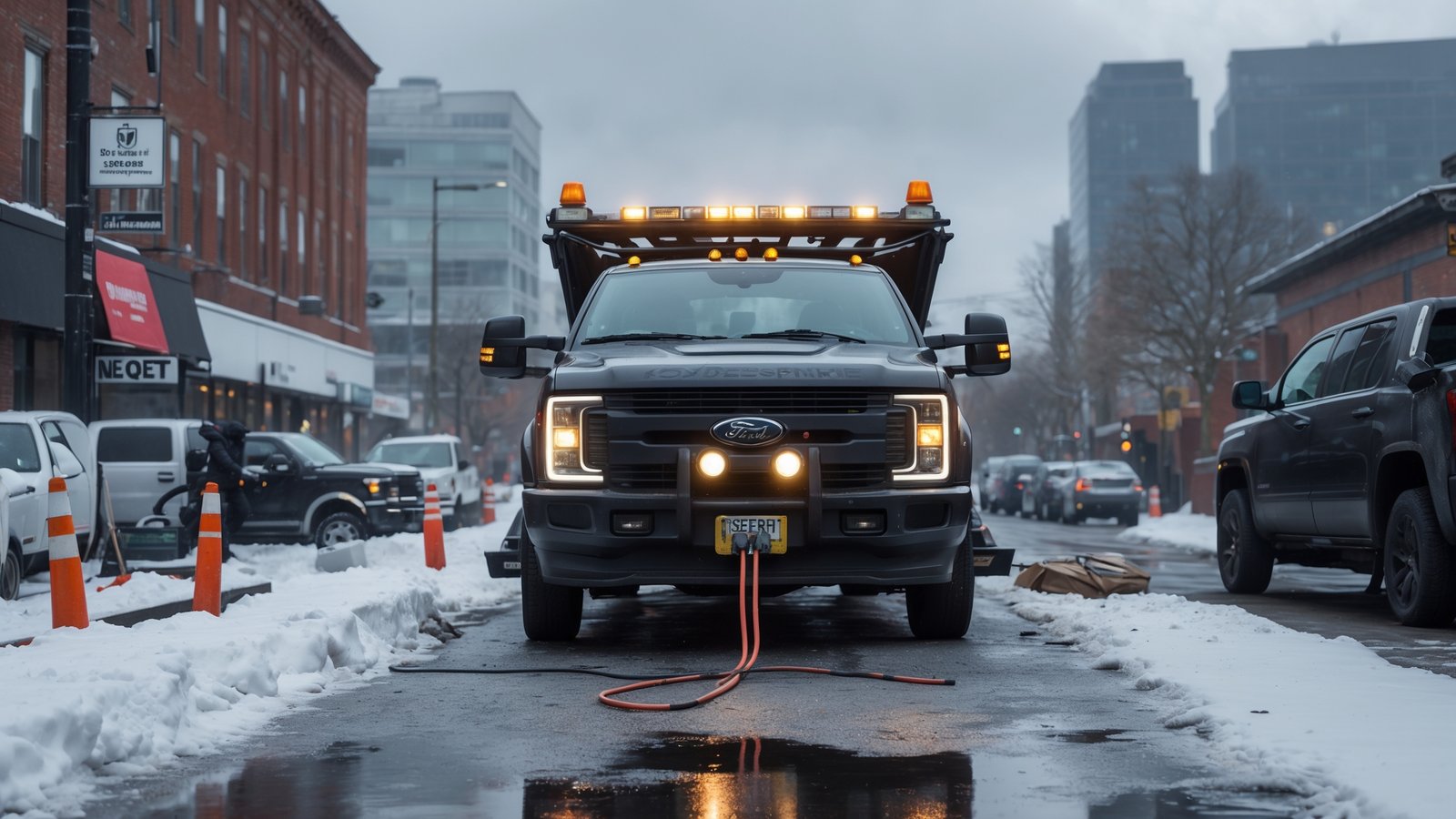
Yes, professional technicians can safely jumpstart vehicles in wet conditions. Water doesn’t conduct electricity well enough to create danger when proper procedures are followed. However, technicians take extra precautions in severe weather, including ensuring cables don’t sit in puddles and that connections are secure before power transfer begins.
What if my car won’t stay running after a jumpstart?
If your engine dies shortly after a successful jumpstart, your alternator likely isn’t charging the battery, or you have a significant electrical drain. Professional technicians can test your alternator on the spot and recommend whether you need towing to a repair facility. Don’t repeatedly attempt to jump and drive a vehicle that won’t stay running, as this can leave you stranded in a less convenient location.
Do I need to replace my battery after getting a jumpstart?
Not necessarily. If your battery died because you left lights on or the car sat unused for weeks, a jumpstart and proper recharging might fully restore it. However, if your battery is more than three to five years old or testing shows reduced capacity, replacement is usually the best long-term solution. The technician can test your battery and provide specific guidance based on its condition and age.
Getting Help When You Need It
A dead battery is frustrating, but knowing what happens during a professional jumpstart service removes the uncertainty. From safety checks to proper cable connections to post-start testing, trained technicians follow procedures that protect your vehicle and get you moving safely.
When you’re stranded with a dead battery anywhere in the Seattle area, Smith Towing provides professional jumpstart service with trained technicians and commercial-grade equipment. Our team serves Seattle, Redmond, Kirkland, and Edmond with rapid response times and upfront pricing. Call +18633732644 for reliable service that gets you back on the road quickly and safely.